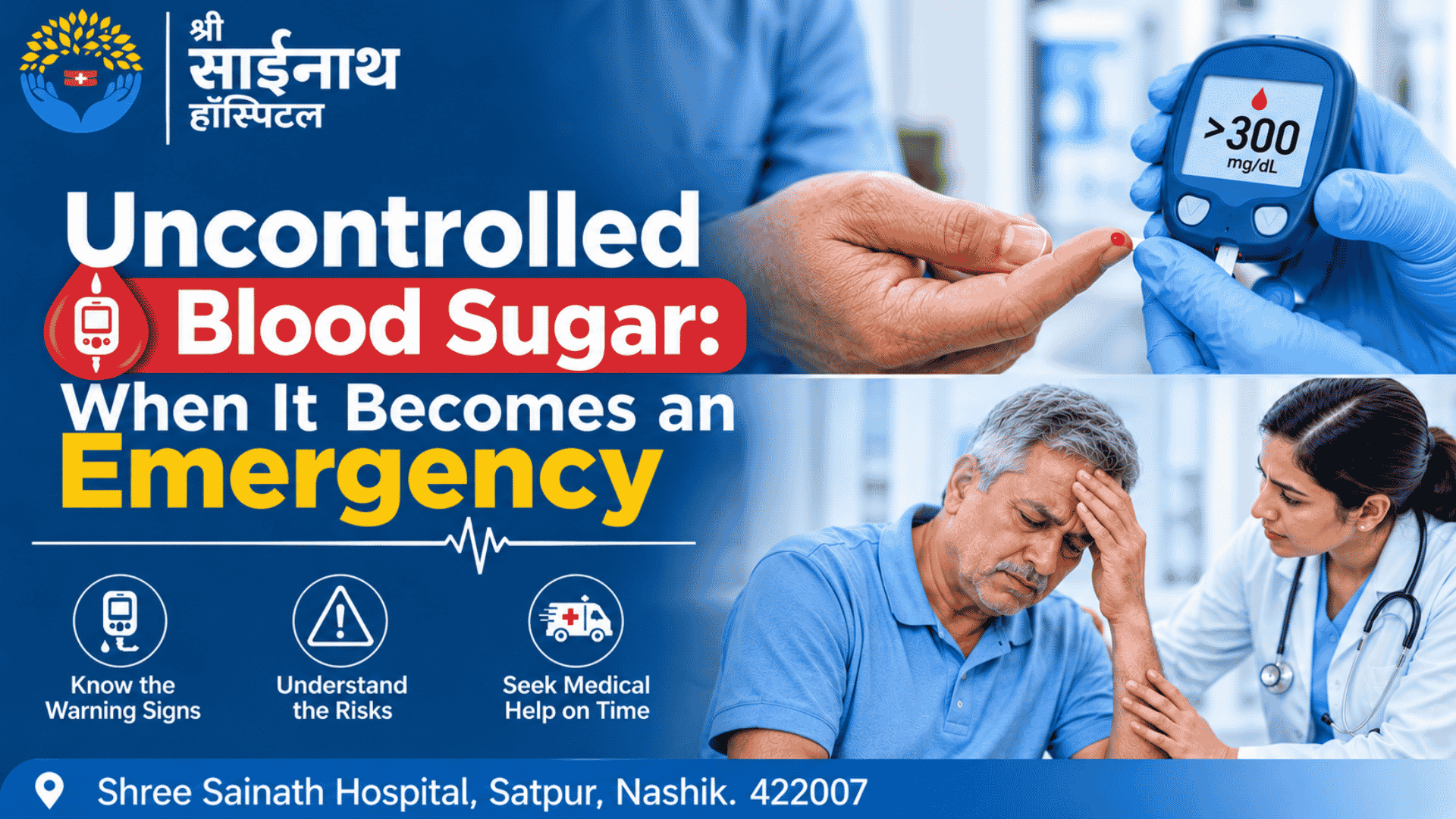
Uncontrolled Blood Sugar: When It Becomes an Emergency
High blood sugar becomes an emergency when it comes with vomiting, belly pain, fast deep breathing, confusion or unusual drowsiness, when ketones are moderate or high, or when sugar stays above 300 mg/dL and you cannot keep fluids down. Very low sugar is an emergency too. Do not wait for it to settle on its own.
Three diabetes emergencies patients should know
Warning signs you should never ignore
Thirst and urination that keep getting worse
Nausea or vomiting that lasts more than a few hours
Belly pain, or breath that smells fruity
Fast, deep breathing
Confusion, slurred speech or unusual sleepiness
A meter reading “HI”, or moderate or large ketones
Dehydration feeds the spiral: more urine, less fluid, higher sugar.
When to come to the ER now
Sugar above 300 mg/dL with vomiting, belly pain or fast breathing
Moderate or large ketones on a strip
Illness for two days with sugar that stays high
Sugar below 54 mg/dL, or no recovery after two rounds of fast sugar
Any collapse, seizure or confusion in a person with diabetes
Call 24x7 Emergency: +91 81808 80975
What to do at home while help is on the way
Check sugar, and ketones if you have strips.
Sip sugar-free fluids such as water, unless you are vomiting.
Do not stop insulin. Call your doctor about dosing during illness.
Skip exercise while sugar and ketones are high.
If sugar is low and the person is awake, give 15 g of fast sugar, about 4 teaspoons in water, then recheck after 15 minutes.
If the person is unconscious, give nothing by mouth, lay them on their side and call 108 or 112.
Carry the meter, medicine list and recent reports.
The SGLT2 trap
Many people take SGLT2 tablets such as dapagliflozin or empagliflozin. If you take one and are vomiting, fasting or ill, ketones can be high even when sugar looks near normal. This is called euglycaemic DKA. Call your doctor early and ask whether to pause the tablet on sick days.
What happens when you reach Shree Sainath Hospital
Our emergency team checks your sugar at once, then runs blood tests including electrolytes and kidney function, with an ECG when needed. Fluids and insulin are given under close monitoring. Patients who need closer watching move to our 15-bed ICU. Pathology runs 24x7.
Prevent the next crisis
Keep a written sick-day plan from your doctor.
Check sugar before meals and at bedtime, and more often when unwell.
Never skip insulin or tablets just because you are not eating.
Before wedding feasts, festival sweets or fasting days, ask your doctor to adjust doses.
Frequently asked questions
What blood sugar level is an emergency?
There is no single number. Sugar above 300 mg/dL with symptoms, moderate or large ketones, a reading above 600 mg/dL, or a reading below 54 mg/dL all need urgent care.
Can Type 2 diabetes cause DKA?
Yes. It is less common than in Type 1, but severe illness, infection or SGLT2 tablets can trigger it.
What are ketones, and how do I check them?
Ketones are acids made when the body burns fat because it lacks insulin. Check them with urine strips or a blood meter, especially when sugar is above 250 mg/dL or you are ill.
Should I take extra insulin when sugar is very high?
Only as your doctor has told you. If you have no plan, sugar stays high, or you are vomiting, get medical help.
Is it safe to wait until morning?
Not if you have vomiting, fast breathing, drowsiness or ketones. DKA can develop within hours.
Talk to our team
Unsure about your sugar control? Our physicians can review your readings and medicines. See our emergency care and diabetes and hypertension care.
This article is for general information and does not replace advice from your doctor.