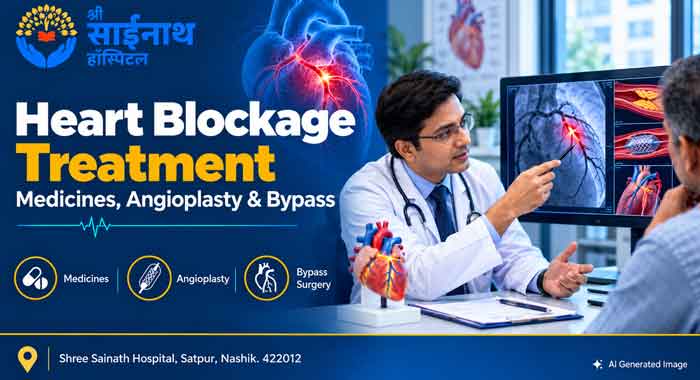
Heart Blockage Treatment: Medicines, Angioplasty or Bypass?
Being told that you have a heart blockage can raise many questions. Is medication enough? Will you need angioplasty and a stent? Is bypass surgery necessary? And how do doctors decide which treatment is appropriate?
Heart blockage treatment depends on the location and severity of the narrowed arteries, symptoms, test results, other medical conditions and whether the patient is experiencing an emergency. Some people may be managed with medicines and lifestyle changes, while others may benefit from angioplasty or coronary artery bypass surgery.
For patients exploring heart blockage treatment in Nashik, understanding these options can help make conversations with a cardiac specialist more informed. However, the treatment decision must be based on an individual medical assessment, not just a percentage of blockage reported on a test.
Quick Answer: Is Heart Blockage Treated With Medicines, Angioplasty or Bypass?
All three approaches can have a role in coronary artery disease.
Medicines: Help control symptoms, manage risk factors and reduce the risk of future cardiovascular events.
Angioplasty: Uses a catheter, usually with a balloon and often a stent, to improve blood flow through a narrowed coronary artery.
Bypass surgery: Creates a new route for blood to flow around narrowed or blocked coronary arteries.
Neither angioplasty nor bypass is automatically necessary for every blockage. Doctors consider the clinical situation, coronary anatomy, symptom burden, expected benefits and risks before recommending treatment. In a heart attack or another acute coronary emergency, urgent treatment may be required.
What Is a Heart Blockage?
A heart blockage commonly refers to narrowing of one or more coronary arteries, the blood vessels that supply oxygen-rich blood to the heart muscle.
Fatty deposits, cholesterol and other substances can accumulate inside artery walls, forming plaques. This process is called atherosclerosis. As the arteries narrow, blood flow to the heart muscle may become limited, particularly during physical activity or stress.
Coronary artery disease can cause chest discomfort, breathlessness and other symptoms. If a plaque ruptures and a blood clot suddenly obstructs blood flow, a heart attack may occur.
The severity of symptoms does not always reflect the severity of the underlying disease. A medical assessment is important even if symptoms are mild or intermittent.
What Are the Symptoms of Heart Blockage?
Symptoms can vary from person to person. Some patients have no noticeable symptoms until the disease becomes more advanced.
Possible warning signs include:
Chest pressure, tightness, heaviness or pain.
Discomfort spreading to the arms, shoulders, back, neck, jaw or upper abdomen.
Breathlessness during activity or at rest.
Unusual fatigue or reduced exercise tolerance.
Sweating, nausea, light-headedness or dizziness, particularly when associated with chest discomfort.
Some people, including those with diabetes and older adults, may experience less typical symptoms.
When is it an emergency?
New or persistent chest pressure, severe breathlessness, cold sweating, fainting, or symptoms suggestive of a heart attack require immediate emergency medical assessment. Call India's emergency number, 112, or your local ambulance service. Do not delay emergency care to book a routine appointment or wait for an online response.
How Is Heart Blockage Diagnosed?
Doctors combine the patient's history, examination and appropriate investigations to assess suspected coronary artery disease.
Depending on the symptoms and clinical situation, evaluation may include:
ECG: Records the heart's electrical activity and can help identify changes associated with a heart attack or other cardiac problems.
Blood tests: Troponin testing may help detect heart muscle injury when a heart attack is suspected.
Echocardiography: Uses ultrasound to assess heart structure, pumping function and movement of the heart walls.
Coronary CT angiography or other selected tests: May help evaluate coronary arteries in appropriate patients.
Invasive coronary angiography: Uses contrast dye and X-ray imaging to show coronary artery narrowing and help doctors plan treatment.
Not every patient needs every test. The choice depends on the urgency, symptoms, medical history and initial findings.
What Does Coronary Angiography Show?
Coronary angiography can show where the arteries are narrowed, how extensive the disease is and how the coronary anatomy may influence treatment decisions.
However, the percentage of narrowing is only one part of the decision. Doctors also consider which artery is affected, the number and complexity of lesions, symptoms, heart function, associated illnesses and whether the patient has an acute coronary syndrome.
Heart Blockage Treatment Options
There is no single treatment suitable for every patient. The three main approaches are medical management, angioplasty and bypass surgery.
1. Medicines for Heart Blockage
Medicines are an important part of coronary artery disease treatment, whether or not a patient undergoes a procedure.
Depending on the diagnosis and individual needs, a doctor may prescribe medicines to:
Lower cholesterol and help reduce cardiovascular risk.
Reduce the risk of blood clots when indicated.
Control blood pressure.
Reduce the heart's workload or relieve chest pain.
Manage diabetes and other contributing conditions.
The medication plan varies according to the patient's condition, bleeding risk, blood pressure, heart function and other factors.
Can heart blockage be treated with medicines alone?
Yes, some patients can be managed without angioplasty or bypass surgery. For others, medicines are used alongside a procedure. The right approach depends on the type and severity of coronary artery disease, symptoms and clinical risk.
Do not start, stop or change heart medicines without medical advice. In particular, do not stop prescribed antiplatelet medicines after stent placement without consulting the treating clinician, because doing so can increase the risk of serious complications.
2. Angioplasty and Stent Placement
Coronary angioplasty, also called percutaneous coronary intervention (PCI), is a minimally invasive procedure used to improve blood flow through a narrowed coronary artery.
During the procedure, a doctor guides a thin catheter through a blood vessel, commonly in the wrist or groin, toward the affected artery. A small balloon may be inflated to widen the narrowed area, and a stent is often placed to help keep the artery open.
When is angioplasty required?
Angioplasty may be recommended in situations such as:
A heart attack requiring urgent restoration of blood flow.
Certain patients with persistent symptoms despite appropriate medical treatment.
Selected cases in which the coronary anatomy and clinical findings support PCI.
Angioplasty is not automatically the best option for every patient with a blockage. The decision depends on the clinical situation, anatomy, potential benefit and procedural risks.
3. Coronary Artery Bypass Surgery
Coronary artery bypass grafting (CABG), commonly called bypass surgery, is an operation that creates a new route for blood to reach the heart muscle beyond narrowed or blocked coronary arteries. Surgeons use a suitable blood vessel from another part of the body to construct the bypass.
When is bypass surgery needed?
A cardiac team may consider bypass surgery for certain patients with:
Complex narrowing involving multiple coronary arteries.
Disease affecting important coronary artery locations, including selected cases involving the left main artery.
Coronary anatomy for which surgery may provide a better overall option than PCI.
Other clinical circumstances in which the expected benefits of surgery outweigh its risks.
The decision should consider the patient's overall health, heart function, other illnesses, coronary anatomy, preferences and expected outcomes. Bypass surgery is a major procedure, and its risks and recovery needs should be discussed with the treating team.
Angioplasty vs Bypass Surgery: What Is the Difference?
Neither option is universally better. In some patients, angioplasty may be appropriate; in others, bypass surgery may offer greater benefit. Some patients may be best treated with medicines and monitoring.
For complex coronary disease, a multidisciplinary cardiac team may compare the expected benefits and risks of PCI, bypass surgery and medical management.
How Do Doctors Choose the Right Heart Blockage Treatment?
A treatment recommendation usually takes several factors into account.
Location of the blockage: The artery affected and its importance to the heart muscle.
Extent of coronary disease: Whether one artery or several arteries are involved.
Symptoms: Whether chest discomfort or breathlessness occurs, how severe it is and whether it persists despite treatment.
Urgency: Whether the patient has a heart attack or another acute coronary syndrome.
Heart function: How effectively the heart pumps blood.
Other health conditions: Diabetes, kidney disease, lung disease, frailty and other relevant factors.
Expected benefits and risks: The likely advantages, complications and long-term implications of each option.
Patient preferences: The patient's informed preferences after discussing suitable alternatives with the medical team.
This is why two patients with apparently similar blockage percentages may receive different recommendations.
Heart Blockage Treatment Cost in Nashik
The cost of heart blockage treatment in Nashik varies according to the treatment required and the patient's medical needs. A reliable estimate should be based on a clinical assessment and a clear treatment plan.
Factors that may influence the overall cost include:
Diagnostic investigations and specialist consultations.
Medicines and medical management.
Whether angioplasty, stents or bypass surgery are recommended.
The number and complexity of treated lesions or required grafts.
Hospital stay, monitoring and management of complications, if any.
Follow-up consultations, medicines and cardiac rehabilitation.
Insurance coverage and eligibility for applicable schemes.
There is no single price that applies to every patient. Contact the hospital for a verified estimate after the recommended investigations and treatment plan are reviewed. Do not choose a treatment solely on the basis of price; discuss its expected benefits, risks and alternatives with the treating cardiac team.
What Questions Should You Ask Your Doctor?
Before deciding on a treatment plan, consider asking:
What exactly did my tests show?
Is my condition stable, or does it require urgent treatment?
Can medicines manage my condition, or would a procedure offer additional benefit?
Why are you recommending angioplasty or bypass surgery in my case?
What are the expected benefits and risks of each suitable option?
What medicines will I need before and after treatment?
What will recovery, follow-up and rehabilitation involve?
Would a second opinion be appropriate before a planned procedure?
These questions can help patients and family members understand the recommendation and make an informed decision.
Why Consider Specialist Evaluation at Shree Sainath Hospital, Satpur, Nashik?
Shree Sainath Hospital's overarching positioning is Advanced & Life-Saving Care. For patients concerned about possible heart blockage, the appropriate next step is timely medical assessment and referral to a qualified cardiac specialist, as indicated by the clinical situation.
Patients considering heart blockage treatment in Nashik should confirm which cardiac consultations, diagnostic services and procedures are currently available at the hospital before making a treatment or booking decision.
A clear discussion of the diagnosis, available options, expected benefits, risks and follow-up needs can help patients and their families understand the next step in care.
FAQ Section
1. Can heart blockage be treated with medicines?
Yes. Some patients can be managed with medicines and lifestyle changes, while others may need angioplasty or bypass surgery. The choice depends on symptoms, coronary anatomy, test results and overall clinical risk.
2. Is angioplasty better than bypass surgery?
Neither is best for everyone. Angioplasty may suit certain blockages, while bypass surgery may be preferable for some patients with complex or extensive coronary disease. A cardiac specialist should compare the options for the individual patient.
3. When is angioplasty required?
Angioplasty may be needed urgently during certain heart attacks or considered for selected patients with coronary artery disease. The recommendation depends on the patient's clinical condition and coronary anatomy.
4. When is bypass surgery needed?
Bypass surgery may be considered when coronary artery disease is complex or extensive, or when the anatomy and clinical circumstances favour surgery over angioplasty. The decision requires an individualized assessment.
5. Does every heart blockage cause symptoms?
No. Coronary artery disease can be present without noticeable symptoms. New chest discomfort, breathlessness or other concerning symptoms should be medically assessed.
6. What is the cost of heart blockage treatment in Nashik?
The cost depends on the investigations, recommended treatment, procedure complexity, hospital stay, medicines and follow-up needs. Request a verified estimate based on the proposed treatment plan.
7. Should I get a second opinion before bypass surgery?
For planned treatment, a second opinion may help you understand the diagnosis, available alternatives, benefits and risks. However, if a heart attack or another emergency is suspected, do not delay urgent medical care to seek another opinion.
8. What should I do if I have chest pain and sweating?
New or persistent chest pain or pressure accompanied by sweating, breathlessness, faintness or similar symptoms may indicate a medical emergency. Call 112 in India or your local ambulance service immediately. Do not wait for a routine consultation.
Concerned about heart blockage or unsure which treatment may be appropriate?
Discuss your symptoms, investigation reports and treatment options with a qualified cardiac specialist. Contact Shree Sainath Hospital, Satpur, Nashik, to confirm the relevant consultation and available services.
If you experience symptoms that may indicate a heart attack, seek emergency medical care immediately.