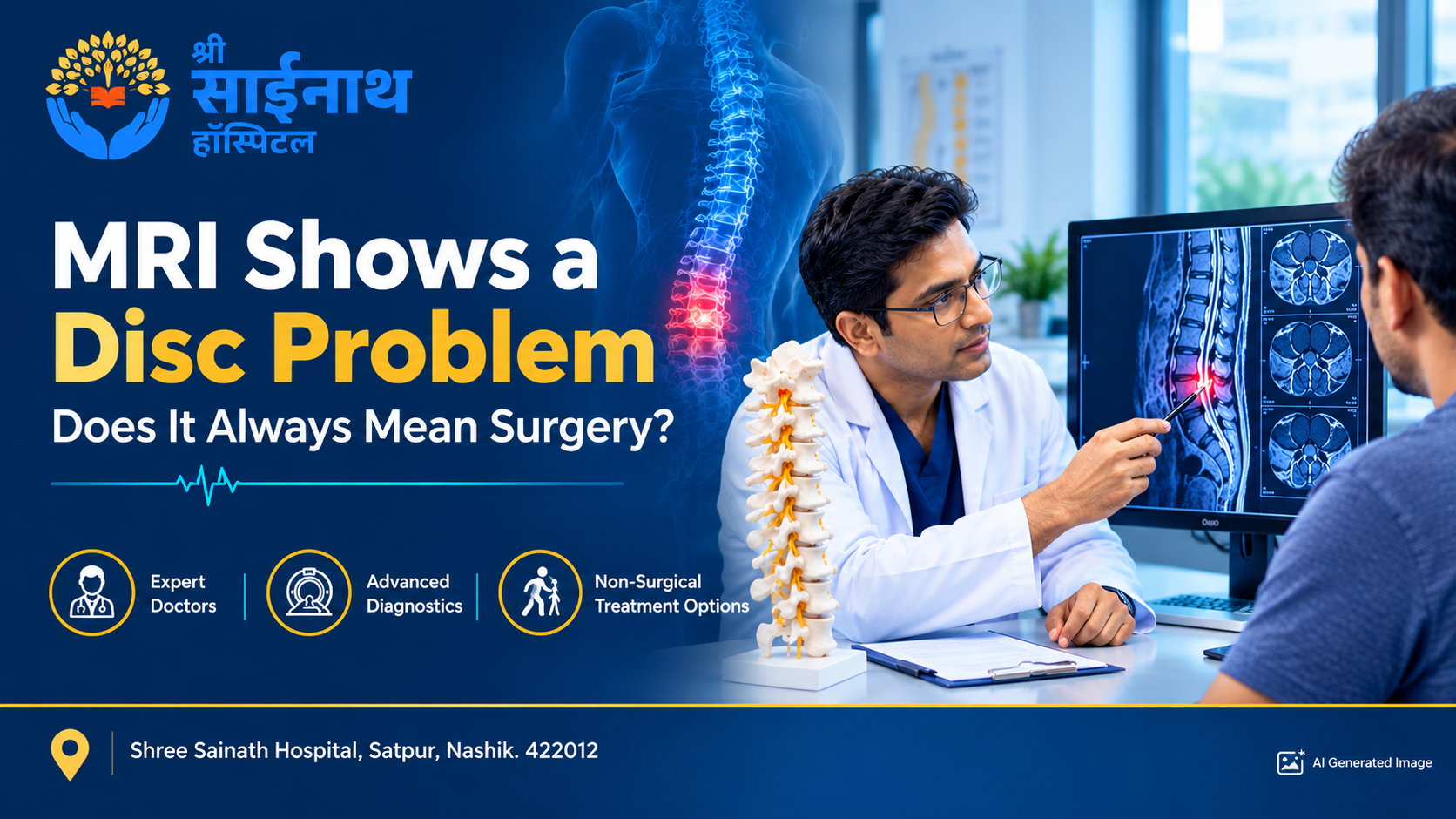
MRI Shows a Disc Problem: Does It Always Mean Surgery?
An MRI report showing a disc bulge or slipped disc can be worrying, especially when you are already experiencing back pain, neck pain, or pain that travels down your arm or leg. Many patients immediately wonder whether they will need spine surgery.
The reassuring news is that an MRI showing a disc problem does not automatically mean surgery is necessary. Some disc abnormalities cause few or no symptoms, while others may irritate or compress nearby nerves and require medical treatment.
The right treatment depends on your symptoms, physical examination, MRI findings, medical history, and response to treatment. Understanding what your MRI report means can help you discuss the next steps with a qualified spine specialist.
Quick Answer: Does Every Disc Problem on MRI Require Surgery?
No. Many patients with a disc bulge or herniated disc can be managed without surgery. Depending on the condition, treatment may include appropriate medication, activity modification, guided physiotherapy, and other non-surgical approaches recommended by a clinician.
Spine surgery may be considered when symptoms remain severe despite appropriate treatment, when nerve compression causes significant functional problems, or when specific neurological findings make surgery necessary.
An MRI report should always be interpreted alongside your symptoms and clinical examination. The scan alone cannot determine whether you need surgery.
What Does a Disc Problem on MRI Mean?
The spine is made up of bones called vertebrae, with intervertebral discs between them. These discs help absorb pressure, support movement, and provide cushioning during everyday activities.
Each disc has a soft inner portion surrounded by a stronger outer layer. Changes in the shape or structure of a disc can sometimes affect nearby nerves.
An MRI scan provides detailed images of the spinal discs, nerves, and surrounding soft tissues. It can help doctors identify abnormalities such as disc bulges, disc herniation, and possible nerve compression.
Common terms in an MRI report include:
1. Disc Bulge
A disc bulge occurs when the outer contour of a disc extends beyond its usual boundary. It can develop as part of age-related changes and does not always cause pain or other symptoms.
2. Herniated Disc or Slipped Disc
A herniated disc occurs when material from inside a disc pushes through a weakened or damaged area of its outer layer. The term “slipped disc” is commonly used by patients to describe this condition, although the disc does not literally slip out of place.
A herniated disc may irritate or compress a nearby nerve, potentially causing pain, tingling, numbness, or weakness.
3. Disc Degeneration
Disc degeneration refers to changes in the disc associated with ageing, wear, or other factors. These changes may appear on MRI scans even in people who do not experience significant symptoms.
4. Nerve Compression
Nerve compression occurs when a spinal nerve is pressed or irritated by surrounding structures. Depending on the location and severity, it may cause pain radiating into an arm or leg, altered sensation, or muscle weakness.
Important: An abnormal MRI finding does not necessarily identify the cause of your pain. A doctor must determine whether the imaging findings match your symptoms and examination.
Why Can an MRI Show a Disc Problem Even Without Severe Pain?
MRI scans can reveal spinal changes that are not necessarily responsible for a person's symptoms.
Disc bulges and degenerative changes become more common with age, including among people who have no back pain. Therefore, seeing an abnormality on a scan does not automatically mean that the condition is serious or requires an operation.
Doctors generally consider several factors together:
The location and type of disc abnormality.
Whether the MRI findings match the location of your pain.
Whether you have numbness, tingling, or muscle weakness.
Whether your walking, daily activities, or sleep are affected.
Whether symptoms are improving or worsening.
Whether examination findings suggest nerve involvement.
Whether appropriate non-surgical treatment has helped.
This combined assessment helps distinguish an incidental MRI finding from a disc problem that requires specific treatment.
What Are the Symptoms of a Herniated Disc?
Symptoms vary according to the affected part of the spine and whether nearby nerves are involved.
Common symptoms may include:
Lower back pain or neck pain.
Pain spreading into the buttock, thigh, or leg.
Pain radiating from the neck into the shoulder or arm.
Tingling or pins-and-needles sensations.
Numbness in part of an arm, hand, leg, or foot.
Muscle weakness in the affected area.
Difficulty performing certain movements because of pain.
Some people have a disc abnormality on MRI without experiencing any symptoms.
The location of the disc problem matters. For example, a lumbar disc herniation may affect a nerve travelling into the leg, while a cervical disc herniation may cause symptoms in the shoulder, arm, or hand.
Persistent or worsening symptoms deserve medical evaluation rather than self-diagnosis based on an MRI report alone.
What Are the Treatment Options for a Disc Bulge or Slipped Disc?
Treatment depends on the diagnosis, severity of symptoms, neurological findings, and overall health. Surgery is only one of the possible treatment approaches.
1. Activity Modification
A clinician may recommend temporarily modifying activities that aggravate symptoms. Depending on the condition, this may involve adjusting lifting techniques, avoiding certain painful movements, and gradually returning to normal activities.
Prolonged bed rest is generally not recommended for routine back pain. The appropriate level of activity should be guided by symptoms and medical advice.
2. Medication
A doctor may recommend medication to help manage pain or inflammation when appropriate. The choice depends on individual health factors, other medications, and possible side effects.
Avoid starting or combining pain medicines without appropriate medical guidance, particularly if you have other medical conditions.
3. Physiotherapy for a Slipped Disc
Physiotherapy may help selected patients improve movement, strength, flexibility, and functional ability. A physiotherapist can recommend exercises and movement strategies according to the diagnosis and symptoms.
Exercises should be tailored to the individual. Movements that significantly increase radiating pain, numbness, or weakness should be stopped and discussed with a healthcare professional.
4. Other Non-Surgical Treatments
Depending on the diagnosis, symptoms, and response to initial treatment, a specialist may discuss additional options, such as selected spinal injections.
Not every patient needs these treatments, and their potential benefits and risks should be explained before proceeding.
5. Monitoring and Follow-Up
Some disc-related symptoms improve over time without surgery. Follow-up allows the clinician to assess whether pain, mobility, and nerve-related symptoms are improving.
New or worsening neurological symptoms should not be ignored while waiting for a routine follow-up.
When Is Spine Surgery Necessary for a Disc Problem?
Spine surgery may be considered when the expected benefits outweigh the risks and the clinical findings support an operation.
A specialist may discuss surgery in situations such as:
Persistent, disabling pain that has not improved sufficiently with appropriate non-surgical treatment.
Ongoing nerve compression that significantly affects daily activities.
Progressive muscle weakness or other worsening neurological deficits.
Specific spinal conditions in which delaying surgery could risk serious or permanent nerve damage.
The decision depends on the particular diagnosis and the patient's clinical condition. Not every patient with a herniated disc, disc bulge, or nerve compression needs surgery.
In some circumstances, surgery may require urgent assessment rather than a prolonged trial of conservative treatment.
What Symptoms Require Urgent Medical Attention?
Seek emergency medical assessment if you develop any of the following symptoms, particularly alongside back pain or a known disc problem:
New difficulty starting urination or inability to pass urine.
Loss of bladder or bowel control.
Numbness around the groin, genitals, or inner thighs, sometimes described as saddle numbness.
Rapidly worsening or severe weakness in one or both legs.
These symptoms can indicate serious nerve compression, including cauda equina syndrome, which requires urgent evaluation. Do not wait for a routine appointment or assume that a previously scheduled MRI review is sufficient.
How Is a Slipped Disc Diagnosed?
An MRI scan is an important diagnostic tool, but it is only one part of the assessment.
A doctor may evaluate a suspected disc problem through the following steps:
1. Medical history: The doctor asks about the location of the pain, when it started, what makes it worse, and whether symptoms travel into the arms or legs.
2. Physical examination: The examination may include checking movement, muscle strength, sensation, reflexes, and walking ability.
3. MRI review: The doctor examines the scan to identify disc abnormalities and determine whether they correspond to the symptoms and examination findings.
4. Additional investigations, if needed: Other tests may be recommended when the diagnosis remains unclear or when another condition needs to be investigated.
An MRI is not required for every episode of back pain. A clinician determines whether imaging is appropriate based on the symptoms, examination, and suspected cause.
Bulging Disc vs Herniated Disc: What Is the Difference?
The terms describe different types of disc changes, but neither diagnosis alone determines the severity of a patient's condition. The location, extent, symptoms, and neurological examination are important when planning treatment.
Can a Disc Bulge Heal Naturally Without Surgery?
Many people with disc-related symptoms improve without surgery. Some herniated discs also shrink over time as the body gradually reabsorbs some of the displaced disc material.
However, improvement varies from person to person. A disc may continue to appear abnormal on MRI even after the patient's symptoms have improved.
Non-surgical management may include:
Following an individually appropriate activity plan.
Taking prescribed medication when needed.
Participating in suitable physiotherapy.
Attending follow-up appointments.
Seeking reassessment if symptoms persist or worsen.
Do not assume that a disc problem has resolved solely because pain has decreased. Similarly, a persistent MRI abnormality does not automatically mean that surgery is required.
How Long Does Recovery From a Slipped Disc Take Without Surgery?
Recovery time depends on the type of disc problem, the severity of symptoms, nerve involvement, general health, and response to treatment.
Some people notice improvement over several weeks, while others experience symptoms for longer and require additional assessment or treatment.
Recovery may involve gradual improvement in pain, movement, strength, and the ability to return to everyday activities.
There is no single recovery timeline that applies to every patient. Follow your clinician's recommendations and seek reassessment if symptoms fail to improve, interfere significantly with daily life, or become worse.
Should You Get a Second Opinion Before Spine Surgery?
If surgery has been recommended for a disc problem, a second opinion may help you better understand the diagnosis, the reason for the proposed procedure, and the available alternatives.
A second opinion can be particularly useful when:
You are unsure why surgery has been recommended.
Your MRI report and symptoms seem inconsistent.
You want to understand non-surgical treatment options.
You would like to discuss the potential benefits and risks of surgery.
You have questions about recovery, rehabilitation, or long-term expectations.
A second opinion should not delay emergency assessment when serious neurological symptoms are present.
Questions to Ask Your Spine Specialist
Before deciding on treatment, consider asking:
What exactly does my MRI report show?
Do the MRI findings explain my symptoms?
Is a nerve being compressed?
What non-surgical treatments are appropriate for me?
What are the potential benefits and risks of surgery in my case?
What could happen if I delay surgery?
Which symptoms would require urgent medical attention?
Would a second opinion be helpful before proceeding?
These questions can help you make an informed decision with your treating doctor.
Spine Specialist Consultation at Shree Sainath Hospital, Satpur, Nashik
An MRI report mentioning a disc bulge, slipped disc, or herniated disc can raise understandable concerns about surgery. However, treatment decisions should be based on a complete clinical assessment rather than the scan report alone.
At Shree Sainath Hospital, Satpur, Nashik, patients seeking evaluation for spine-related symptoms can discuss their concerns, imaging reports, and appropriate next steps with a qualified treating specialist.
The goal of an assessment is to understand the underlying problem, consider suitable treatment options, and determine whether non-surgical care or surgical evaluation is appropriate.
Bring your MRI images and report, previous medical records, and details of any treatment you have already tried to your consultation.
Hospital-specific spine services and available specialists should be confirmed directly with the hospital before making an appointment.
Frequently Asked Questions
1. Does every slipped disc require surgery?
No. Many slipped discs can be managed without surgery. The treatment decision depends on symptoms, clinical examination, neurological findings, and the response to appropriate treatment.
2. Can a disc problem on MRI be harmless?
Yes. Some people have disc bulges or degenerative changes on MRI without experiencing symptoms. A doctor must assess whether the finding is relevant to the patient's condition.
3. Can a herniated disc heal without surgery?
Many patients improve with non-surgical treatment, and some herniated discs may shrink over time. Recovery varies, so persistent or worsening symptoms should be assessed by a clinician.
4. When is slipped disc surgery necessary?
Surgery may be considered for persistent disabling symptoms despite appropriate treatment, significant nerve-related problems, or specific conditions requiring timely intervention. Progressive weakness and symptoms suggesting serious nerve compression require prompt medical assessment.
5. Is physiotherapy safe for a slipped disc?
Physiotherapy can be helpful for appropriately selected patients. The exercise plan should be tailored to the person's symptoms and clinical findings, with reassessment if pain or neurological symptoms worsen.
6. Does a large disc bulge always mean a serious problem?
No. The size of a disc abnormality alone does not determine its clinical significance. Its location, effect on nearby nerves, associated symptoms, and examination findings also matter.
7. Should I consult a spine specialist if my MRI shows a disc bulge but I have no pain?
Not every incidental MRI finding requires specialist treatment. Discuss the report with your treating doctor, particularly if you have neurological symptoms, relevant medical concerns, or questions about the findings.
8. When should I seek emergency care for a disc problem?
Seek emergency assessment for new bladder or bowel dysfunction, numbness around the groin or saddle area, or rapidly worsening leg weakness. These may indicate serious nerve compression requiring urgent treatment.
An MRI Finding Is Not an Automatic Decision for Surgery
An MRI showing a disc bulge or herniated disc does not automatically mean you need spine surgery. Many patients improve with appropriate non-surgical care, while others may benefit from surgery depending on their symptoms, examination findings, and clinical condition.
The most important step is to understand what the MRI finding means for you. Review your report with a qualified specialist, discuss the available treatment options, and seek urgent assessment if you develop warning signs of serious nerve compression.
Considering spine surgery? Discuss your MRI report, symptoms, and treatment options with a specialist at Shree Sainath Hospital, Satpur, Nashik, before making an informed treatment decision.
Medical disclaimer: This article is for educational purposes and does not replace a professional medical consultation, diagnosis, or individualized treatment advice.