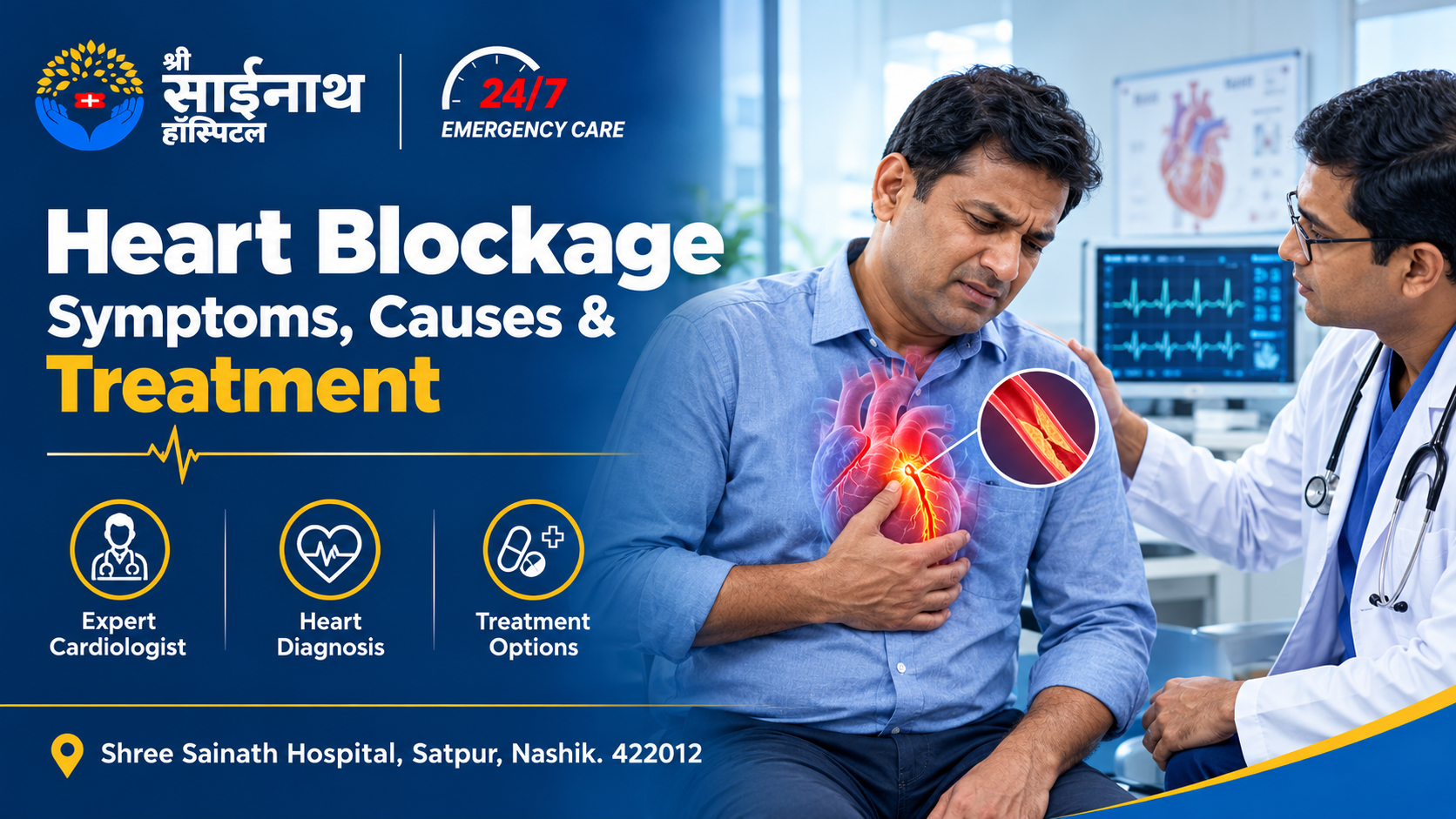
Heart Blockage: What Does It Mean and What Are the Treatment Options?
What Is Heart Blockage?
The term “heart blockage” commonly refers to narrowing or blockage in the coronary arteries, the blood vessels that supply oxygen-rich blood to the heart muscle.
This narrowing is often caused by atherosclerosis, a process in which plaque builds up inside the artery. Plaque may contain cholesterol, fats and other substances. As the artery becomes narrower, blood flow to the heart muscle may become restricted.
Heart blockage is not simply a diagnosis based on symptoms. Some people with coronary artery disease may have few or no obvious symptoms, while others may experience chest discomfort, breathlessness or reduced exercise tolerance.
A proper medical evaluation is therefore important to determine whether symptoms are related to coronary artery disease and whether significant narrowing is present.
What Are the Symptoms of Heart Blockage?
Heart blockage symptoms can vary depending on the location and severity of coronary artery disease and how much blood flow is affected.
Possible symptoms include:
Chest pain, pressure or discomfort
Breathlessness, particularly during physical activity
Unusual tiredness
Reduced ability to perform physical activity
Discomfort that may spread to the arm, shoulder, neck, jaw or back
Dizziness or light-headedness
Sweating
Nausea
Some people may have coronary artery disease without experiencing obvious symptoms.
It is also important to remember that these symptoms do not automatically mean that a person has a heart blockage. Similar symptoms can occur with other medical conditions.
When Should Chest Pain Be Treated as an Emergency?
New, severe or persistent chest pain requires urgent medical assessment, particularly when it occurs with breathlessness, sweating, nausea, fainting, or discomfort spreading to the arm, shoulder, neck, jaw or back.
Do not delay emergency medical care while trying to determine whether the symptoms are caused by heart blockage.
What Causes Heart Blockage?
The most common underlying process is atherosclerosis, in which plaque gradually accumulates inside the coronary arteries.
Several factors can increase the risk of coronary artery disease, including:
High LDL cholesterol
High blood pressure
Diabetes
Smoking or tobacco use
Physical inactivity
Overweight or obesity
Family history of cardiovascular disease
Increasing age
Other cardiovascular risk factors
Several risk factors may occur together. For example, a person with diabetes, high blood pressure and high cholesterol may have a different cardiovascular risk profile from someone with only one risk factor.
Managing these risk factors is an important part of reducing the risk of progression of coronary artery disease.
What Are the Early Signs of Heart Blockage?
There is no single symptom that can reliably confirm heart blockage.
Possible early warning symptoms may include:
Chest discomfort during physical activity
Breathlessness during exertion
Unusual tiredness
Reduced exercise tolerance
Recurrent discomfort in the chest, shoulder, arm, neck or jaw
However, some people may have coronary artery disease without noticeable symptoms.
If symptoms are recurrent or concerning, a doctor or cardiologist can determine whether further cardiac evaluation is appropriate.
How Is Heart Blockage Diagnosed?
There is no single “heart blockage test” that is appropriate for everyone.
A cardiologist may select investigations based on the person's symptoms, medical history, physical examination and cardiovascular risk factors.
Depending on the clinical situation, evaluation may include:
1. ECG
An electrocardiogram (ECG) records the electrical activity of the heart and can help identify certain abnormalities, including changes that may occur during or after a heart attack.
2. Echocardiography
An echocardiogram uses ultrasound to assess the heart's structure and function. It can provide information about heart chambers, valves and how effectively the heart is pumping.
3. TMT / Stress Testing
A treadmill test (TMT) or other stress test may be used in selected patients to assess how the heart responds to physical stress.
4. Coronary Angiography
Coronary angiography uses a catheter and contrast material to visualize the coronary arteries and identify areas of narrowing or blockage.
5. Other Investigations
Depending on the clinical situation, a doctor may recommend blood tests or other forms of cardiac imaging.
The appropriate investigation varies from person to person. A test that is useful for one patient may not be necessary for another.
What Are the Treatment Options for Heart Blockage?
Heart blockage treatment depends on several factors, including symptoms, the location and severity of coronary artery disease, test results, heart function and the person's overall health.
Treatment may include:
Lifestyle and risk-factor management
Medicines
Coronary angioplasty with or without stent placement
Coronary artery bypass grafting (CABG) in selected patients
Not everyone with coronary artery narrowing requires angioplasty or bypass surgery.
Some patients may be appropriately managed with medicines and lifestyle changes, depending on their clinical findings.
The appropriate treatment should therefore be determined following an individual medical evaluation.
Can Heart Blockage Be Treated Without Surgery?
In some patients, coronary artery disease can be managed without an invasive procedure.
Depending on the diagnosis, treatment may include:
Cholesterol-lowering medicines
Blood-pressure management
Medicines for angina or other cardiac symptoms
Diabetes management
Smoking cessation
Heart-healthy dietary changes
Regular physical activity as medically appropriate
Ongoing medical monitoring and follow-up
However, “heart blockage without surgery” does not mean that every blockage can or should be treated without a procedure.
Patients with significant coronary artery disease or an acute cardiac event may require an intervention to restore blood flow.
Treatment should therefore be based on the patient's clinical condition rather than solely on the percentage of blockage.
When Is Angioplasty Considered for Heart Blockage?
Angioplasty, also called percutaneous coronary intervention (PCI), is a procedure used to improve blood flow through a narrowed or blocked coronary artery.
During coronary angioplasty, a thin catheter is guided through a blood vessel toward the affected coronary artery. A small balloon may be inflated at the narrowed area to improve the opening. A stent may then be placed when clinically appropriate to help keep the artery open.
Angioplasty may be considered in situations such as:
Significant coronary artery narrowing
Angina or other symptoms related to reduced blood flow
Certain acute coronary syndromes
Coronary blockages where PCI is clinically appropriate
Situations where restoring blood flow is necessary
The decision to perform angioplasty is not based simply on the presence of a blockage. The cardiologist considers the patient's symptoms, clinical findings, coronary anatomy and overall medical condition.
What Is a Stent?
A stent is a small mesh tube that can be placed inside a coronary artery during angioplasty to help keep the artery open.
After the stent is placed, the catheter and balloon are removed while the stent remains in the artery.
Patients who receive a coronary stent may be prescribed medicines that help reduce the risk of blood clots. These medicines should be taken exactly as prescribed and should not be stopped without medical advice.
When Is Bypass Surgery Considered?
Coronary artery bypass grafting (CABG) is a surgical procedure that creates an alternative route for blood to reach the heart muscle around narrowed or blocked coronary arteries.
A surgeon uses a healthy blood vessel from another part of the body to create the bypass.
CABG may be considered for some patients with:
Multiple significantly narrowed coronary arteries
Certain complex patterns of coronary artery disease
Disease involving important coronary vessels
Coronary disease that is not suitable for PCI
Certain patients with diabetes or other clinical factors
The decision between medical treatment, angioplasty and bypass surgery requires an individualized assessment by the appropriate cardiac care team.
Does 70% or 90% Heart Blockage Always Mean Angioplasty?
Not necessarily.
Patients often search for terms such as “70 percent heart blockage” or “90 percent heart blockage” after receiving an angiography report.
The percentage describes the degree of narrowing, but treatment decisions involve more than one number.
Doctors may consider:
Which coronary artery is affected
Where the narrowing is located
Whether there are multiple blockages
The patient's symptoms
Whether blood flow is significantly limited
Heart function
Other medical conditions
Previous cardiac procedures
Overall cardiovascular risk
Therefore, a blockage percentage should not be interpreted in isolation.
A blockage percentage alone does not determine whether a person needs angioplasty, bypass surgery or medicines.
What Happens During Coronary Angioplasty?
If angioplasty is recommended, the procedure generally involves several steps:
The patient is prepared and given appropriate medication.
A thin catheter is inserted through a blood vessel, commonly through the wrist or groin.
The catheter is guided toward the coronary arteries.
The affected coronary artery is assessed.
A balloon may be used to widen the narrowed area when appropriate.
A stent may be placed when clinically indicated.
The catheter is removed after the procedure.
Angioplasty is performed through a catheter rather than by opening the chest as in traditional bypass surgery.
Recovery varies depending on the procedure, the patient's overall health and whether angioplasty was performed electively or as part of emergency treatment.
When Should You See a Cardiologist?
Consider medical evaluation if you experience:
Recurrent chest discomfort
Breathlessness during physical activity
Unexplained reduction in exercise tolerance
Recurrent dizziness
Unusual or persistent tiredness
Symptoms that repeatedly occur during physical activity
A cardiologist can assess your symptoms and risk factors and determine whether cardiac investigations are appropriate.
If you experience new, severe or persistent chest pain, especially with breathlessness, sweating, nausea, fainting or pain spreading to the arm, shoulder, neck, jaw or back, seek urgent medical attention.
How Can You Reduce the Risk of Coronary Artery Disease?
While not all cardiovascular risk can be eliminated, managing modifiable risk factors can help reduce the risk of coronary artery disease.
Important measures include:
Avoiding tobacco and smoking
Managing blood pressure
Managing cholesterol
Keeping diabetes under appropriate control
Maintaining a healthy weight
Staying physically active as medically appropriate
Following a balanced, heart-healthy diet
Taking prescribed medicines as directed
Attending recommended medical check-ups
People with known cardiovascular risk factors should discuss an appropriate prevention and monitoring plan with their healthcare professional.
Key Takeaway
Heart blockage usually refers to narrowing or blockage of the coronary arteries. It can range from disease that causes few symptoms to significant coronary artery disease requiring medical or procedural treatment.
Treatment may involve lifestyle changes and medicines, while some patients may require angioplasty with or without a stent or coronary artery bypass surgery.
Importantly, the percentage of blockage alone does not determine treatment. Symptoms, artery location, coronary anatomy, blood-flow limitation, heart function and other health conditions all need to be considered.
If you have concerning cardiac symptoms, an appropriate medical evaluation can help determine the cause and the most suitable treatment approach.
Frequently Asked Questions About Heart Blockage
1. What is heart blockage?
Heart blockage commonly refers to narrowing or blockage of the coronary arteries that supply blood to the heart muscle. It is often associated with plaque buildup inside the arteries.
2. What are the common symptoms of heart blockage?
Possible symptoms include chest pain or pressure, breathlessness, unusual tiredness, reduced exercise tolerance, dizziness, sweating, nausea, or discomfort that may spread to the arm, shoulder, neck, jaw or back. Some people may have coronary artery disease without obvious symptoms.
3. What causes heart blockage?
The most common underlying process is atherosclerosis, in which plaque builds up inside the coronary arteries. Risk factors include high LDL cholesterol, high blood pressure, diabetes, smoking, physical inactivity, obesity, increasing age and family history of cardiovascular disease.
4. How is heart blockage diagnosed?
Depending on the patient's symptoms and risk factors, a cardiologist may recommend tests such as an ECG, echocardiogram, stress testing, coronary angiography, blood tests or other cardiac imaging.
5. Does 70% or 90% heart blockage always require angioplasty?
No. The percentage of narrowing alone does not determine treatment. Doctors consider the affected artery, location of the narrowing, symptoms, blood-flow limitation, heart function, other medical conditions and the overall clinical picture.
6. Can heart blockage be treated without surgery?
Some patients can be managed with medicines, lifestyle changes and risk-factor management. However, significant coronary artery disease or certain acute cardiac conditions may require an intervention. The appropriate treatment depends on individual medical findings.
7. When is angioplasty recommended for heart blockage?
Angioplasty may be considered when coronary artery narrowing is clinically significant and is causing symptoms or when restoring blood flow is necessary, including certain acute coronary syndromes. The decision is based on individual clinical and angiographic findings.
8. What is a stent used for in heart blockage?
A stent is a small mesh tube placed inside a coronary artery during angioplasty to help keep the artery open and maintain blood flow.
9. When is bypass surgery considered for heart blockage?
CABG may be considered for certain patients with multiple or complex coronary blockages, disease involving important coronary vessels, or coronary disease that is not suitable for angioplasty. The decision is individualized.
10. When should I see a cardiologist for possible heart blockage?
You should consider medical evaluation for recurrent chest discomfort, breathlessness during activity, unexplained reduction in exercise tolerance or recurrent dizziness.
New, severe or persistent chest pain, particularly when accompanied by breathlessness, sweating, nausea or fainting, requires urgent medical assessment.
11. Can heart blockage be prevented?
The risk of coronary artery disease can be reduced by managing cholesterol and blood pressure, controlling diabetes, avoiding tobacco, maintaining a healthy weight, staying physically active as medically appropriate and following a heart-healthy diet.
Regular medical follow-up can also help identify and manage cardiovascular risk factors.
Medical Disclaimer
This article is intended for general health education and does not replace a consultation with a qualified healthcare professional. Symptoms of heart disease can vary between individuals. Diagnosis and treatment decisions should be based on an individual's medical history, examination, investigations and clinical condition. If you experience severe or persistent chest pain or other emergency symptoms, seek urgent medical attention.