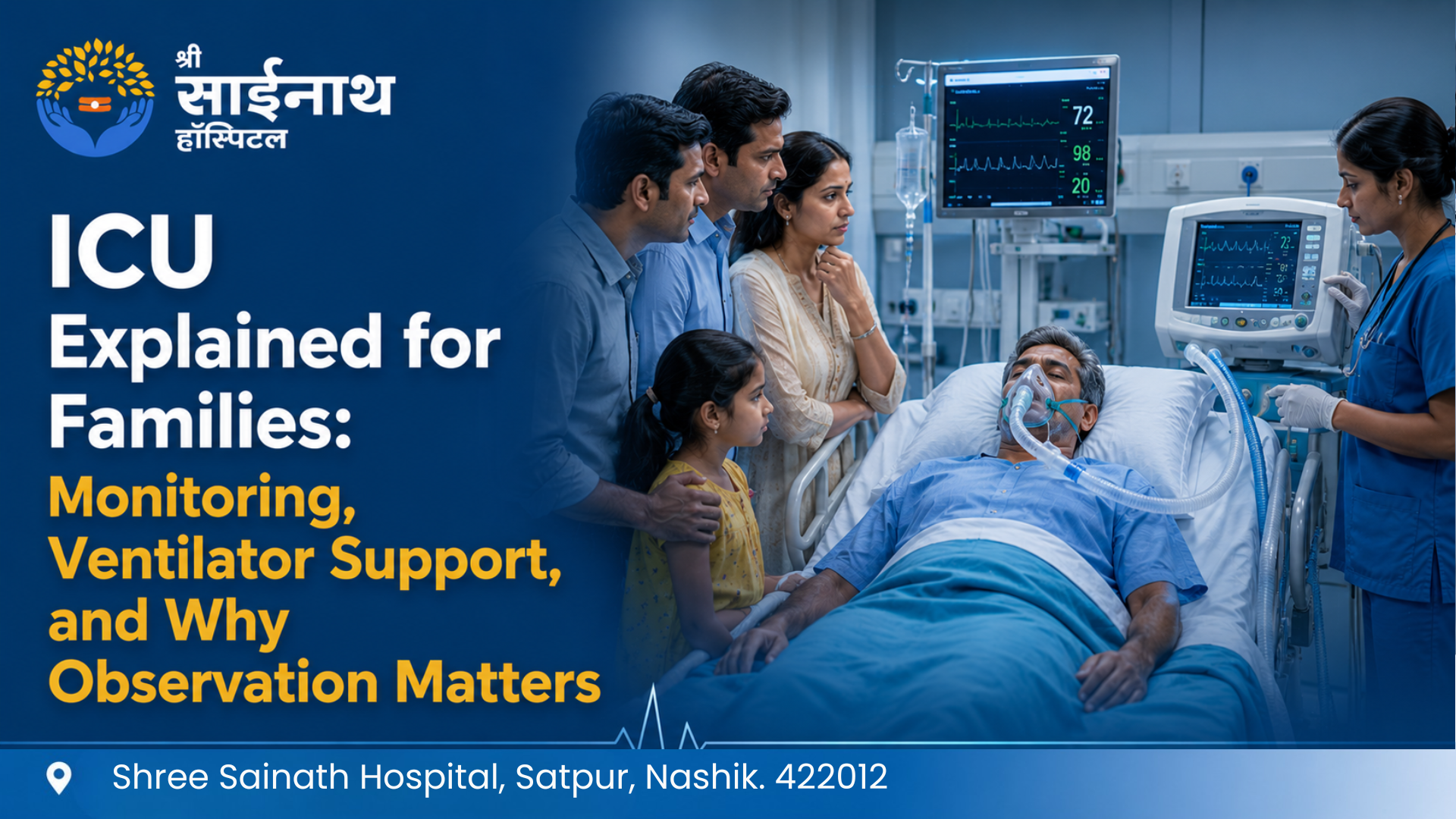
ICU Explained for Families: Monitoring, Ventilator Support & Why Matters
ICU Explained for Families: Monitoring, Ventilator Support & Why Observation Matters
Quick Answer
An ICU (Intensive Care Unit) is designed for patients who need:
Continuous monitoring
Rapid medical response
Advanced breathing or heart support
Close observation during serious illness
Ventilator support may be used when a patient cannot breathe adequately. ICU care focuses on stabilization, safety, monitoring, and recovery, and many patients improve with timely treatment.
ICU Explained in Simple Terms
ICU stands for Intensive Care Unit.
It is a specialized area in the hospital for patients whose condition may change quickly and needs close observation.
ICU is not only for “critical last-stage patients.”
In many cases, patients are admitted early to prevent complications and improve outcomes.
Why ICU Admission Happens
Doctors recommend ICU care when closer monitoring is safer than general ward care.
Common reasons include:
Severe infections
Breathing difficulty
Heart-related conditions
Stroke or neurological issues
Major surgery recovery
Trauma or accidents
Low oxygen levels
Unstable blood pressure
Important:
Even if a patient looks stable, ICU may still be needed because some conditions can worsen suddenly.
What “Continuous Monitoring” Really Means
In ICU, vital functions are monitored 24/7:
Heart rate
Blood pressure
Oxygen levels
Breathing pattern
Temperature
Consciousness level
Why it matters:
Early detection = faster treatment
This helps prevent complications before they become serious.
Why ICU Has Machines and Alarms
ICU equipment may feel overwhelming, but it plays a critical safety role.
Alarms alert doctors if:
Oxygen levels drop
Heart rhythm changes
Blood pressure fluctuates
Breathing patterns shift
Not every alarm means danger.
Many are early-warning systems to ensure quick response.
Ventilator Support: Simple Explanation
A ventilator is a machine that helps a patient breathe.
It may be needed when:
Breathing is weak or insufficient
Oxygen levels remain low
Lungs need support during illness
Controlled breathing is required
Key point:
Ventilator support is often temporary.
Many patients recover and gradually return to normal breathing.
Why ICU Observation Matters (Even When Patient Looks Stable)
Serious illnesses can worsen silently.
Possible sudden changes:
Drop in oxygen levels
Irregular heartbeat
Blood pressure changes
Neurological deterioration
ICU allows instant response, which can be life-saving. ICU is not just treatmentIt is also prevention and early intervention
ICU Care Is Team-Based
ICU treatment involves multiple specialists working together:
Consulting doctors
Critical care specialists
ICU nurses
Respiratory therapists
Lab and imaging teams
Rehabilitation experts
ICU nurses play a key role by continuously monitoring the patient and informing doctors immediately if anything changes.
What Families Can Expect During ICU Stay
The first 24–48 hours can feel uncertain.
Important things to understand:
Treatment plans may change based on response
Recovery is often gradual
Updates are usually given at specific times
Doctors may observe before making decisions
Helpful questions to ask:
What is the main concern right now?
What improvements are being monitored?
What is the next 24-hour plan?
Clear communication helps reduce stress.
ICU in Heart Emergencies
ICU is crucial for heart-related conditions because changes can happen quickly.
Monitoring includes:
Heart rhythm tracking
Chest pain evaluation
Oxygen support
Blood pressure stabilization
Post-procedure care
ICU in Stroke & Brain Conditions
Neurological conditions require close observation.
Doctors monitor:
Consciousness
Speech
Movement
Breathing
Brain response
Early detection of changes helps prevent further damage.
Insurance & ICU Admission
During emergencies, handling finances can be stressful.
If insurance is available, keep ready:
Insurance card
ID proof
Previous reports
Policy details
Cashless processing is usually handled alongside treatment.
FAQs
Does ICU always mean the patient is critical?
No. ICU is used when close monitoring is required. Many patients recover and shift to regular wards.
Why are ICU alarms always active?
They are safety alerts to notify doctors of any changes in vital signs.
Is ventilator support permanent?
Not always. In many cases, it is temporary and reduced as the patient improves.
Why are visiting rules strict in ICU?
To maintain infection control, ensure patient rest, and allow smooth medical care.
How can families help?
Stay informed
Share medical history
Follow ICU guidelines
Provide emotional support
Shree Sainath Hospital – ICU Care You Can Trust in Nashik
When every second matters, having the right medical support makes a difference.
At Shree Sainath Hospital, Satpur (Nashik), ICU care is focused on:
Continuous monitoring with advanced equipment
Experienced doctors and trained ICU staff
Timely decision-making and critical care support
Patient safety, stabilization, and recovery
Need guidance or emergency support?
Book Appointment Now - Click Here
Early care can prevent complications.
Don’t wait if symptoms are serious.
Medical Disclaimer
This article is for awareness only and does not replace professional medical advice. In case of emergency, seek immediate medical care.