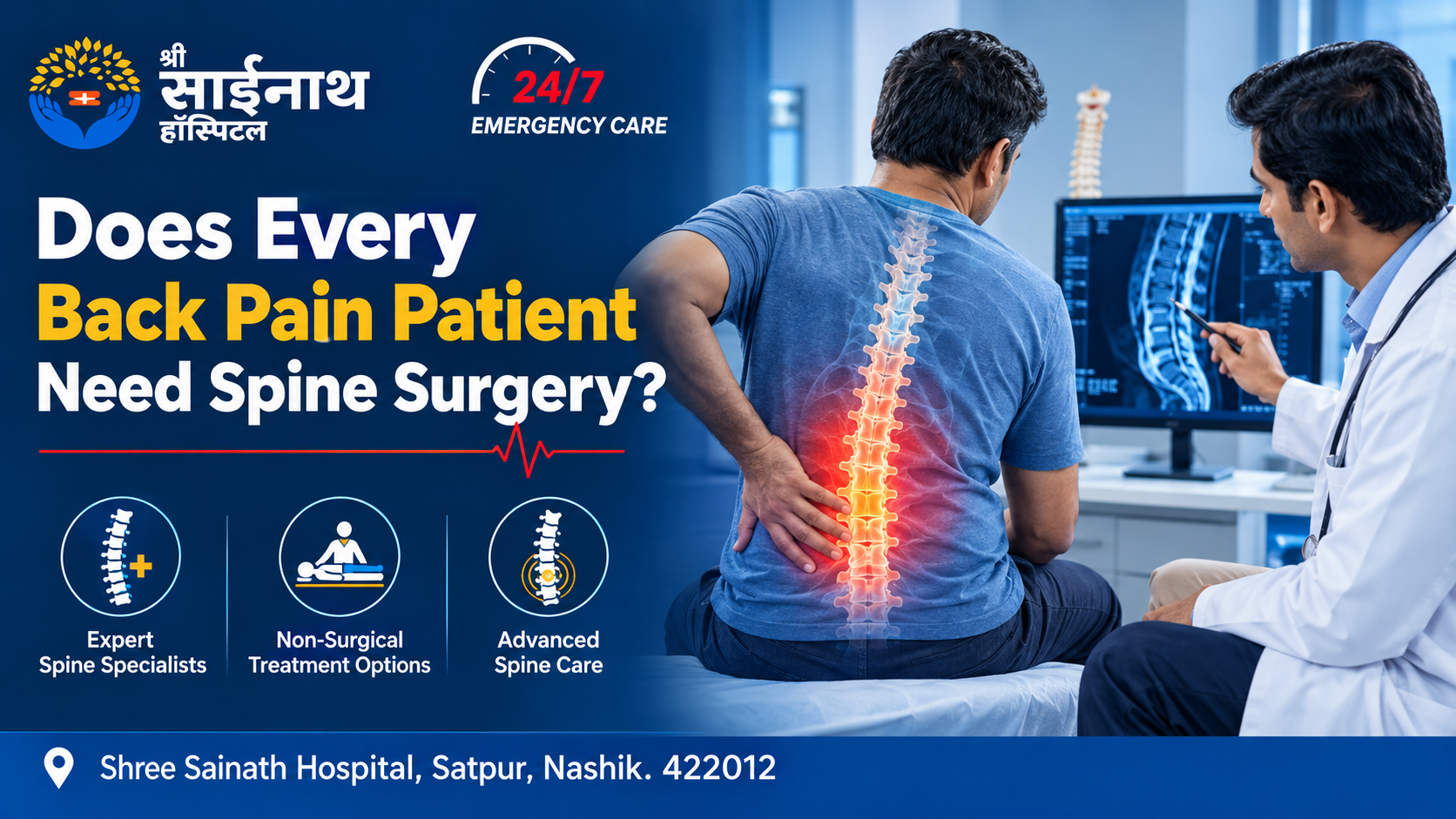
Does Every Back Pain Patient Need Spine Surgery?
Back pain is extremely common, and it can range from a temporary muscle strain to pain caused by a disc problem, nerve compression or another spinal condition. Because some severe spinal conditions may require surgery, many people understandably worry that persistent back pain automatically means they need an operation.
The answer is no. Not every back pain patient needs spine surgery.
The appropriate treatment depends on the cause of the pain, its severity and duration, associated symptoms, examination findings, imaging results and how the patient responds to non-surgical treatment. Many back pain problems can initially be managed with conservative approaches such as appropriate activity, medication, physiotherapy and exercise.
However, some patients may need specialist assessment and, in selected situations, spine surgery may be considered.
Understanding the difference can help patients make more informed decisions about their back pain treatment.
Quick Answer: Does Every Back Pain Patient Need Spine Surgery?
No. Spine surgery is not automatically required for everyone with back pain.
Many causes of back pain can be managed without surgery. Depending on the diagnosis, treatment may include:
Activity modification
Appropriate medicines
Physiotherapy
Therapeutic exercises
Lifestyle changes
Weight management where appropriate
Other non-surgical treatments recommended by a doctor
Surgery may be considered when a specific spinal problem is causing significant symptoms and appropriate non-surgical treatment has not provided sufficient improvement, or when there are concerning neurological symptoms that require more urgent evaluation.
What Causes Back Pain?
Back pain can have many different causes. Identifying the underlying cause is important because treatment for a muscle strain may be very different from treatment for nerve compression.
Common causes may include:
Muscle or ligament strain
Poor movement or lifting technique
Disc-related problems
Herniated or slipped disc
Degenerative changes in the spine
Spinal stenosis
Nerve compression
Certain injuries or fractures
Other spinal or medical conditions
Importantly, back pain itself is a symptom, not a diagnosis.
A person experiencing back pain should not assume that a particular condition is responsible without appropriate medical evaluation.
Can Back Pain Be Treated Without Surgery?
Yes. Non-surgical treatment is an important part of managing many back pain conditions.
Depending on the diagnosis, a doctor may recommend a combination of treatments such as:
1. Physiotherapy
Physiotherapy may help improve movement, flexibility, strength and functional ability. A physiotherapist can also recommend exercises appropriate to the individual's condition.
2. Therapeutic Exercises
Specific exercises may help strengthen muscles that support the spine and improve mobility.
However, exercises should be appropriate for the individual's condition. Exercises that are suitable for one type of back problem may not be appropriate for another.
3. Medication
Doctors may recommend medicines to help manage pain or inflammation when appropriate.
Medication should be taken according to medical advice, particularly when a patient has other health conditions or takes other medicines.
4. Activity Modification
Depending on the condition, temporarily modifying activities that aggravate symptoms may be useful.
Complete prolonged bed rest is generally not recommended for ordinary low back pain; appropriate movement and activity are often encouraged according to the person's condition.
5. Lifestyle Measures
Maintaining a healthy weight, using appropriate lifting techniques and maintaining physical activity may help with back pain management and spinal health.
When Is Spine Surgery Needed?
There is no single symptom or timeframe that means every patient needs spine surgery.
A specialist may consider surgery when the underlying spinal problem is clearly identified and symptoms are significant despite appropriate non-surgical treatment, or when there are neurological problems requiring more urgent attention.
Possible factors considered during surgical evaluation include:
Persistent pain that significantly limits normal activities or quality of life
Progressive weakness or neurological deficits
Significant numbness associated with nerve compression
Difficulty standing or walking
Symptoms that do not improve adequately with appropriate conservative treatment
Bowel or bladder dysfunction associated with spinal nerve compression
A structural spinal problem for which surgery is an appropriate treatment
These decisions require an individual clinical assessment.
What Are the Signs That Back Pain May Need Urgent Evaluation?
Most episodes of back pain are not emergencies. However, certain symptoms require prompt medical assessment.
Seek urgent medical attention if back pain is accompanied by symptoms such as:
New or worsening significant weakness in a leg
Loss of bladder or bowel control
Numbness around the genital or rectal region
Severe neurological symptoms
Significant pain following a serious injury
Back pain accompanied by concerning symptoms such as fever or other signs of serious illness
These symptoms can sometimes indicate significant nerve compression or another serious condition requiring urgent evaluation.
Do not wait for an online consultation or routine appointment when serious neurological symptoms or significant trauma are present.
What Is the Role of an MRI in Back Pain Diagnosis?
An MRI can provide detailed images of the spine, discs and surrounding structures. It may be useful when a doctor suspects a disc problem, nerve compression, spinal stenosis or another condition requiring further investigation.
However, having an abnormal MRI does not automatically mean that surgery is necessary.
Imaging findings need to be interpreted together with:
Symptoms
Physical examination
Medical history
Neurological findings
Duration and severity of symptoms
Response to treatment
This is important because spinal changes seen on imaging may not always be the actual source of a person's pain.
Therefore, MRI results should be discussed with an appropriate healthcare professional rather than interpreted in isolation.
Does a Slipped or Herniated Disc Always Require Surgery?
No.
Many patients with a herniated disc and associated symptoms improve without surgery. The American Association of Neurological Surgeons notes that the majority of herniated discs do not require surgery, although some patients may need surgical evaluation depending on their symptoms and response to treatment.
Surgery may be considered in selected situations, including persistent disabling symptoms despite appropriate conservative treatment or progressive neurological problems.
The decision depends on the relationship between the patient's symptoms, clinical examination and imaging findings.
What About Sciatica?
Sciatica generally refers to pain or other symptoms traveling along the path of the sciatic nerve, often involving the lower back, buttock and leg.
It can be associated with nerve irritation or compression, including from a herniated disc.
Treatment may initially involve non-surgical approaches depending on the severity and cause.
Some patients with persistent or severe symptoms may eventually require specialist evaluation for procedures or surgery. The decision should be based on the specific cause and clinical findings rather than the presence of sciatica alone.
What About Spinal Stenosis?
Spinal stenosis occurs when there is narrowing around the spinal canal or nerve pathways, which can place pressure on nerves.
Treatment may include non-surgical approaches such as:
Medication
Exercise
Physiotherapy
Activity modification
Other treatments recommended by a specialist
If symptoms remain significant despite appropriate non-surgical treatment, or if neurological problems develop, surgery may be considered in selected patients.
Spine Surgery Is Not One Single Procedure
If surgery is recommended, the type of spine surgery depends on the underlying condition.
Depending on the diagnosis, procedures may include:
Discectomy
Decompression surgery
Laminectomy
Foraminotomy
Spinal fusion
Other condition-specific procedures
For example, decompression procedures may be used to relieve pressure on nerves in selected cases of spinal stenosis, while discectomy may be considered for certain symptomatic herniated discs.
The procedure should be selected based on the patient's diagnosis, anatomy, symptoms and overall health.
When Should You See a Spine Specialist?
Consider consulting a spine specialist when:
Back pain continues or repeatedly returns
Pain is interfering with daily activities
Back pain is associated with leg pain or nerve symptoms
You experience numbness or weakness
Your symptoms are not improving with appropriate treatment
An MRI or other investigation shows a spinal abnormality
Another doctor has suggested spine surgery
You want to understand your treatment options or seek a second opinion
A specialist can evaluate the symptoms and determine whether further investigations, non-surgical treatment or surgical assessment is appropriate.
Should You Get a Second Opinion Before Spine Surgery?
A second opinion can be useful when you have been advised to undergo spine surgery and want to better understand:
The exact diagnosis
Why surgery has been recommended
Whether non-surgical options remain appropriate
What procedure is being proposed
Expected benefits and possible risks
Whether there are alternative treatment options
What recovery and rehabilitation may involve
A second opinion should complement, not delay, urgent medical care when serious neurological symptoms are present.
Questions to Ask Your Spine Specialist
Before making a treatment decision, consider asking:
What is causing my back pain?
Do I have nerve compression or another structural problem?
Do I need an MRI or another investigation?
Can my condition be treated without surgery?
Why are you recommending spine surgery?
What type of surgery is being considered?
What are the potential benefits and risks?
Would a second opinion be appropriate in my case?
These questions can help you understand your diagnosis and participate more confidently in treatment decisions.
Shree Sainath Hospital, Satpur, Nashik
Back pain can have different causes, and the appropriate treatment should be determined after considering the individual's symptoms, examination and medical findings.
At Shree Sainath Hospital, Satpur, Nashik, patients seeking evaluation for spinal and orthopedic concerns can discuss their symptoms, reports and treatment options with the appropriate specialist team.
The hospital's broader positioning is Advanced & Life-Saving Care, with specialty-level evaluation used according to the patient's clinical needs. The aim is to help patients understand their condition and identify an appropriate treatment pathway rather than assuming that every back pain problem requires surgery.
Key Takeaways
Not every back pain patient needs spine surgery.
Many back pain conditions can initially be managed with non-surgical treatment.
Physiotherapy and appropriate exercises may be part of conservative treatment.
A herniated or slipped disc does not automatically mean surgery is required.
MRI findings should be interpreted alongside symptoms and clinical examination.
Surgery may be considered when symptoms remain significantly disabling despite appropriate treatment or when neurological problems develop.
Progressive weakness or new bowel/bladder problems require urgent medical assessment.
If surgery has been recommended, discussing the diagnosis and treatment options with a qualified spine specialist can help you make an informed decision.
FAQ SECTION
1. Does every back pain patient need spine surgery?
No. Many causes of back pain can be treated without surgery. Spine surgery is generally considered only when the specific clinical situation warrants it, such as persistent disabling symptoms despite appropriate treatment or significant neurological problems.
2. Can back pain be treated without surgery?
Yes. Depending on the cause, treatment may include medication, physiotherapy, appropriate exercises, activity modification and other conservative approaches.
3. When is spine surgery needed for back pain?
Spine surgery may be considered when a specific spinal condition is causing significant symptoms that do not respond adequately to appropriate non-surgical treatment, or when progressive neurological deficits or other serious symptoms are present.
4. Does a slipped disc always require surgery?
No. Many herniated discs improve without surgery. Surgical treatment may be considered for selected patients with persistent disabling symptoms or neurological problems.
5. Does an MRI showing a disc problem mean I need surgery?
No. MRI findings should be considered together with symptoms, physical examination and other clinical information. An abnormal scan alone does not automatically mean that surgery is necessary.
6. When should I see a spine specialist for back pain?
You should consider specialist evaluation when pain persists, significantly affects daily activities, is associated with leg pain, numbness or weakness, does not improve with appropriate treatment, or when another doctor has recommended spine surgery.
7. Can physiotherapy help with back pain?
Physiotherapy may help selected patients improve movement, strength, flexibility and function. The appropriate exercises depend on the individual's diagnosis and should be recommended according to their clinical situation.
8. Should I get a second opinion before spine surgery?
A second opinion may help you understand your diagnosis, the reason surgery has been recommended, available alternatives and the proposed procedure. However, urgent symptoms such as significant weakness or bowel/bladder dysfunction require prompt medical evaluation rather than delaying care.
Conclusion
Persistent back pain or have you been advised to consider spine surgery? Discuss your symptoms, reports and treatment options with an appropriate specialist at Shree Sainath Hospital, Satpur, Nashik.
Book a Specialist Consultation →
If you have new or worsening weakness, loss of bladder or bowel control, numbness around the genital/rectal area, or serious injury-related back pain, seek urgent medical attention.