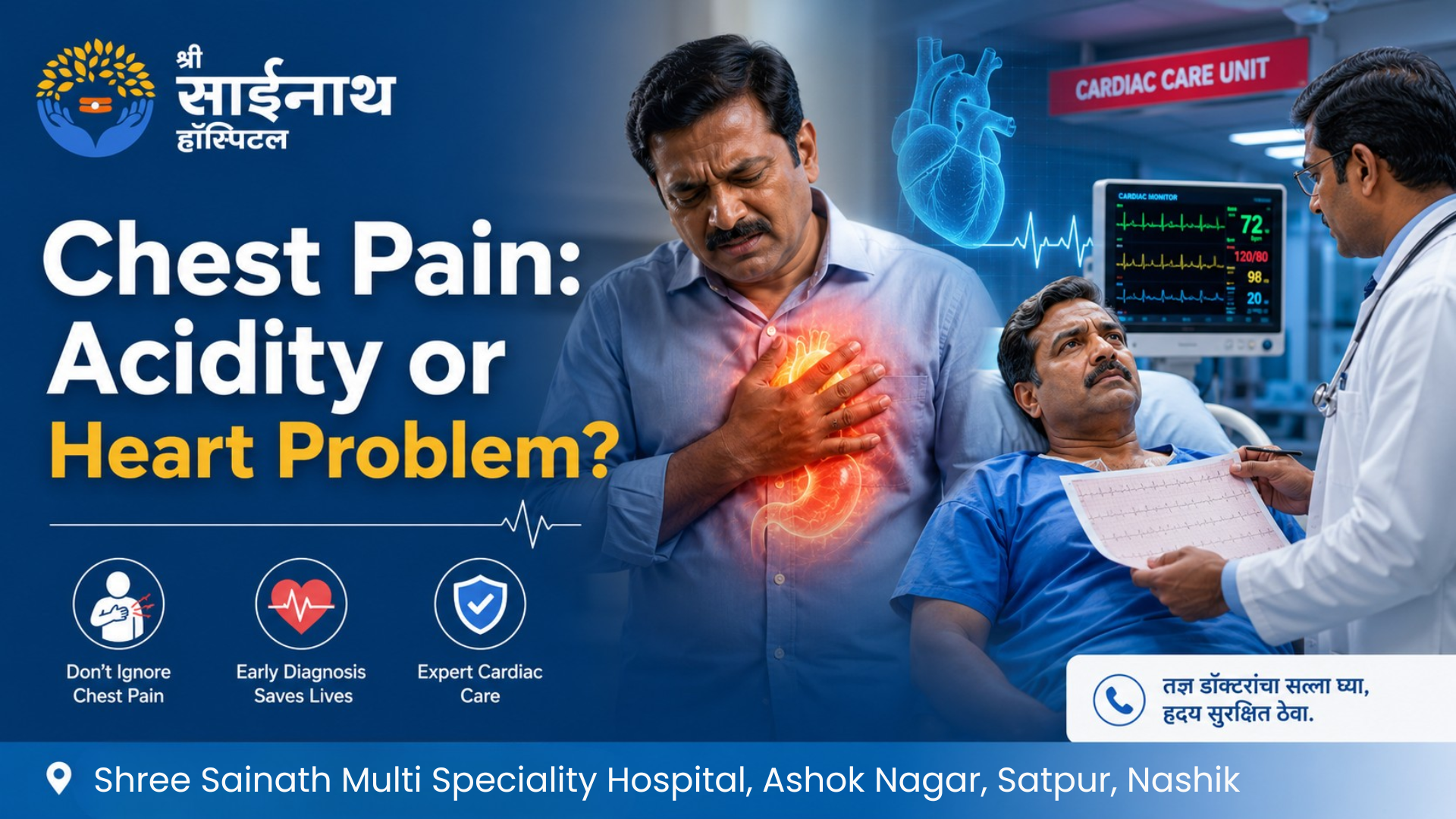
Chest Pain: Acidity or Heart Problem? How Doctors Decide
Chest pain is one of the most common reasons people visit emergency departments in Nashik. Sometimes the cause is simple acidity or gastric reflux. But sometimes chest pain can be an early sign of a serious heart problem that requires urgent treatment.
The confusion happens because both acidity and heart-related chest discomfort can feel similar in the beginning. That is why doctors advise patients not to ignore severe, sudden, or unusual chest pain without medical evaluation.
In this article, we explain how doctors differentiate acidity from cardiac-related chest pain and when families should seek emergency care immediately.
Quick Answer
Chest pain is not always acidity.
Symptoms such as:
severe chest pressure,
pain spreading to the arm or jaw,
breathlessness,
sweating,
dizziness,
or sudden weakness
may indicate a heart emergency and should never be ignored.
When symptoms are sudden, severe, or unusual, early medical evaluation is safer than waiting at home.
Why Many People Assume It’s “Just Acidity”
In India, many people initially treat chest pain at home with antacids or home remedies because they believe it is related to food, gas, or indigestion.
Sometimes that assumption is correct. But doctors worry because heart-related chest pain may also begin with mild heaviness or burning discomfort. Patients often delay treatment hoping symptoms will improve on their own.
In cardiac emergencies, time matters. Early diagnosis and treatment can help reduce complications and improve recovery outcomes.
What Acidity-Related Chest Pain Usually Feels Like
Acidity or acid reflux often causes a burning sensation in the chest or throat. The discomfort is commonly linked to meals, spicy foods, or lying down after eating.
Common acidity-related symptoms include:
burning sensation after meals,
sour taste in the mouth,
bloating,
discomfort while lying flat,
and temporary relief after antacids.
These symptoms are often gradual rather than sudden and are usually manageable with medication, dietary changes, and OPD consultation.
What Heart-Related Chest Pain Feels Like
Heart-related chest pain is often described as pressure, tightness, heaviness, or squeezing pain in the chest. In some patients, the pain spreads to the arm, neck, jaw, shoulder, or back.
Doctors become especially concerned when chest pain occurs together with:
breathlessness,
sweating,
nausea,
dizziness,
palpitations,
or sudden weakness.
Unlike acidity, cardiac chest pain is often unrelated to meals or body position. It may begin during walking, climbing stairs, stress, or even while resting.
Acidity vs Heart Problem: Quick Comparison
Can Young Adults Also Have Heart Problems?
Yes - and this is becoming increasingly common.
Many people still believe heart attacks only happen in older adults, but doctors today are seeing cardiac emergencies even in patients in their 30s and 40s.
Factors that increase cardiac risk include:
diabetes,
smoking,
obesity,
high BP,
stress,
poor lifestyle,
and family history of heart disease.
This is why chest pain should never be ignored based only on age.
How Doctors Evaluate Chest Pain in Emergency Care
When a patient arrives at a 24×7 emergency hospital in Nashik with chest pain, doctors first focus on ruling out dangerous cardiac conditions.
The initial evaluation usually includes checking:
blood pressure,
pulse,
oxygen levels,
breathing status,
and associated symptoms.
Doctors also ask questions about:
when the pain started,
whether it spreads,
severity of symptoms,
and previous medical history.
Tests Commonly Done
Depending on the symptoms, doctors may advise:
ECG,
blood tests,
cardiac markers,
chest X-ray,
or 2D Echo.
An ECG is often performed within minutes because it helps detect many serious cardiac conditions quickly.
If cardiac involvement is suspected, the patient may require ICU monitoring, oxygen support, emergency medications, or advanced cardiac procedures.
Why Cath Lab Support Is Important
Modern cardiac treatment depends heavily on speed. A Cath Lab helps doctors quickly identify blocked heart arteries and begin treatment without delay.
Common procedures performed in a Cath Lab include:
coronary angiography,
angioplasty,
stent placement,
and emergency heart attack intervention.
Having Cath Lab facilities inside the hospital can significantly reduce treatment delays during cardiac emergencies.
When Should You Go to Emergency Immediately?
You should seek emergency medical care immediately if chest pain is associated with:
severe pressure or heaviness,
arm or jaw pain,
sudden sweating,
breathlessness,
dizziness,
fainting sensation,
or worsening symptoms.
Patients with diabetes, hypertension, smoking history, or previous cardiac disease should be even more cautious.
Even if symptoms later turn out to be non-cardiac, early evaluation is always safer than delayed treatment.
What If It Turns Out to Be Acidity?
Many patients worry they may be “overreacting” if emergency evaluation later shows acidity or non-cardiac chest discomfort.
Doctors actually prefer this situation over missing a serious cardiac emergency.
Emergency care is designed to first rule out dangerous causes. Once heart-related problems are excluded, patients can then receive appropriate treatment for acidity, gastric reflux, muscle pain, anxiety-related symptoms, or other non-cardiac conditions.
Cashless Insurance Support
Financial concerns are another reason many families delay hospital visits during chest pain emergencies.
Hospitals with cashless insurance support can help coordinate with insurance providers and TPAs while treatment continues.
If available, carry:
insurance documents,
ID proof,
previous reports,
and current medication details.
Providing these early helps speed up the approval process.
FAQs
Is chest pain always related to the heart?
No. Chest pain may occur due to acidity, muscle strain, anxiety, lung conditions, or gastric reflux. However, serious cardiac causes must always be ruled out first.
Can acidity cause severe chest pain? Yes. Severe acid reflux can sometimes cause intense chest discomfort and burning sensations. Because symptoms may overlap with cardiac pain, severe or unusual chest pain should never be ignored.
Can younger adults get heart attacks? Yes. Younger adults increasingly face cardiac problems due to lifestyle factors, stress, smoking, obesity, diabetes, and family history.
What are the biggest warning signs doctors worry about?
Doctors take chest pain seriously when it occurs together with:
sweating,
breathlessness,
arm or jaw pain,
dizziness,
palpitations,
or sudden weakness.
Final Advice for Families
Chest pain should never be ignored when symptoms are sudden, severe, unusual, or associated with sweating, breathlessness, dizziness, or pain spreading to the arm or jaw.
Early medical evaluation helps doctors quickly determine whether the cause is acidity, a heart problem, or another medical condition. In cardiac emergencies, timely treatment can make a critical difference.
Medical Disclaimer
This article is for general awareness only and does not replace professional medical consultation. If symptoms are severe, sudden, or worsening, seek emergency medical care immediately.Written by: Expert Doctors Team
Location: Satpur, Nashik, Maharashtra
Last updated: 11/06/2026