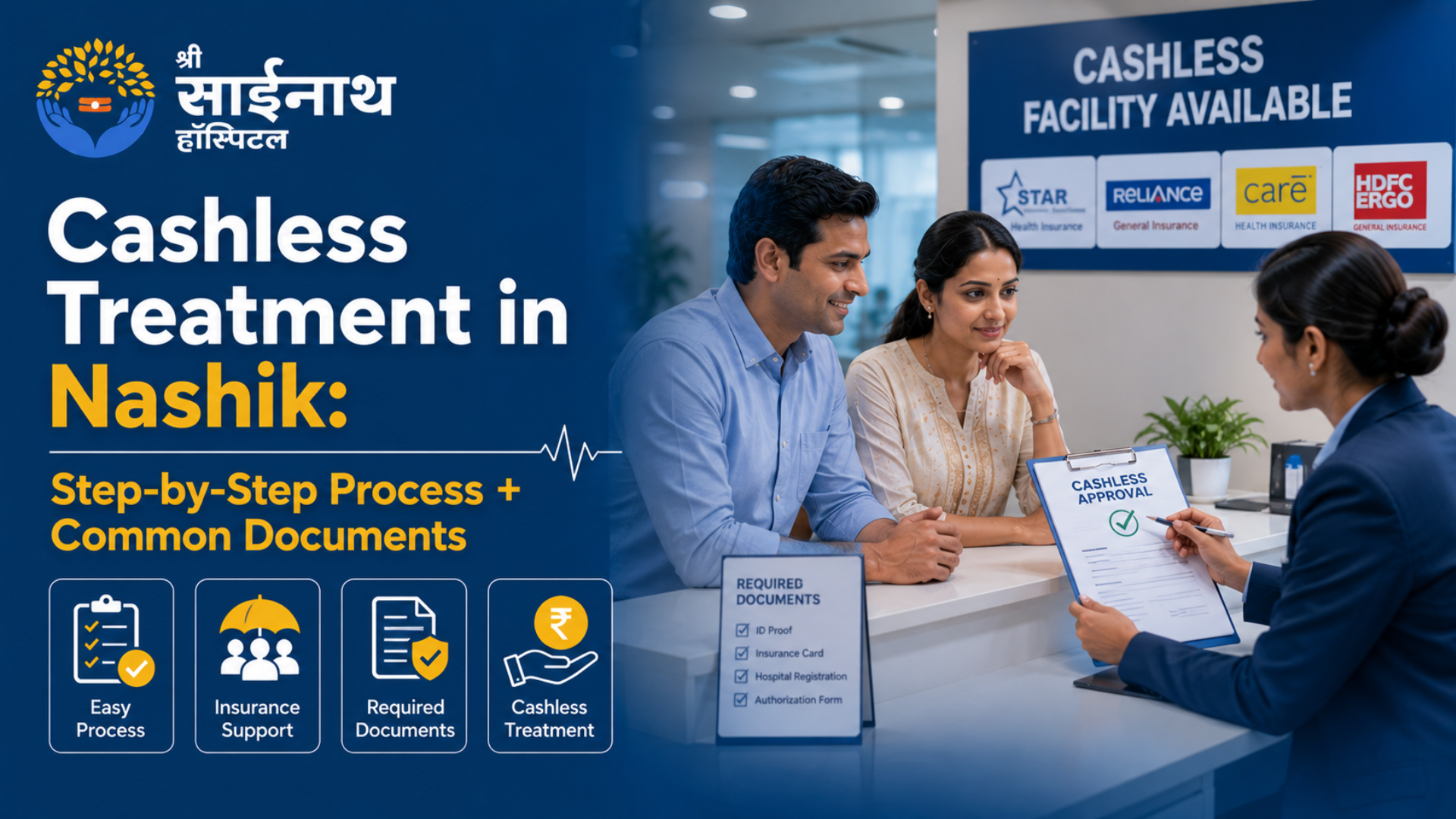
Cashless Treatment in Nashik: Step-by-Step Process & Documents
Medical emergencies are stressful, and worrying about hospital bills can make the situation even harder. Cashless treatment is designed to reduce that burden by allowing your insurance provider to directly settle eligible expenses with the hospital. However, many people are unsure how the process actually works, what documents are needed, and why approvals sometimes take time. Understanding these basics can help you stay prepared and avoid unnecessary delays during critical moments.
Quick Answer
Cashless hospitalization means your insurance company or TPA directly pays eligible hospital expenses as per your policy.
You typically:
Do not need to pay the full bill upfront
Require approval from insurer/TPA
Must submit correct documents on time
Approval depends on:
Policy coverage
Hospital network eligibility
Medical necessity
Documentation accuracy
What “Cashless Treatment” Actually Means
Cashless treatment does not mean free treatment.
It means:
Your insurance provider settles eligible expenses directly with the hospital.
You may still need to pay for:
Non-medical items
Room upgrades
Policy exclusions
Co-payment (co-pay)
Deductibles
Understanding your policy helps avoid confusion at discharge.
Planned vs Emergency Admission (Important Difference)
Planned Admission
Smoother process because you have time to:
Arrange documents
Confirm insurance details
Complete pre-authorization
Examples:
Scheduled surgery
Planned procedures
Emergency Admission
In emergencies, treatment comes first.
Insurance processing happens simultaneously during:
Heart attack
Stroke
Breathing difficulty
Accidents
Approvals may take longer due to:
Ongoing investigations
Limited initial documents
Additional queries from insurer
Step-by-Step Cashless Hospitalization Process
Step 1: Inform at Admission
Tell the hospital you want to use insurance.
Submit:
Insurance card
ID proof
Policy details
Early intimation speeds up approval.
Step 2: Document Verification
Hospital checks:
Patient identity
Policy validity
Network eligibility
Any mismatch can delay approval.
Step 3: Pre-Authorization Request
Hospital sends request including:
Doctor’s notes
Diagnosis
Treatment plan
Estimated cost
This step confirms medical necessity.
Step 4: Approval or Query
Insurer may:
Approve
Partially approve
Ask for more documents
Queries are normal in many cases.
Step 5: Treatment & Final Settlement
At discharge:
Final bill is prepared
Documents sent to insurer
Eligible amount is settled
Patient pays:
Non-covered expenses
Additional charges (if any)
Documents Required for Cashless Treatment
Keep these ready:
Insurance e-card or policy copy
Government ID proof
Doctor’s admission advice
Investigation reports
Previous medical history
Company ID (for corporate insurance)
Pro Tip: Keep digital copies on your phone.
Common Reasons for Cashless Approval Delay
1. Missing Policy Details
No insurance card or incomplete info slows verification.
2. Name or DOB Mismatch
Mismatch between:
Policy
ID proof
Hospital records
Always double-check details.
3. Pending Medical Reports
Insurer may require test reports before approval.
4. Policy Limitations
Some policies include:
Waiting periods
Treatment exclusions
Room rent limits
5. Non-Network Hospital
Cashless is possible only in network hospitals.
What Families Should Understand
Hospitals do not approve insurance claims
They only coordinate with insurer/TPA
Final decision is made by the insurance company
During ICU or emergency care:
Treatment continues while approvals are processed.
Cashless Treatment During ICU & Emergencies
In serious conditions like:
Heart attack
Stroke
Severe infection
Breathing problems
Doctors begin treatment immediately.
Insurance:
Is processed alongside treatment
May take time due to medical urgency
Patient care always comes first.
FAQs
Is cashless treatment available in emergencies?
Yes, if your policy allows it. Approval happens alongside treatment.
Does insurance cover the full hospital bill?
Not always. Coverage depends on:
Policy terms
Co-pay
Exclusions
Room eligibility
Why does approval take time?
Because insurers verify:
Medical necessity
Documents
Policy coverage
What should I keep ready at home?
A file with:
Insurance policy
ID proofs
Previous reports
Prescriptions
Can hospital guarantee approval? No. Final approval depends on insurer/TPA.
Shree SainathHospital, Satpur – Cashless Support You Can Rely On
During medical emergencies, handling both treatment and insurance can feel overwhelming. Having the right support makes a big difference.
At Shree Sainath Hospital, Satpur (Nashik), we assist families with:
Cashless insurance coordination support
Documentation guidance
Emergency and ICU admissions
Continuous communication during treatment
Need help with cashless admission? Contact Here
Medical Disclaimer
This article is for general awareness only and does not replace professional medical advice. In case of emergency, seek immediate medical care.