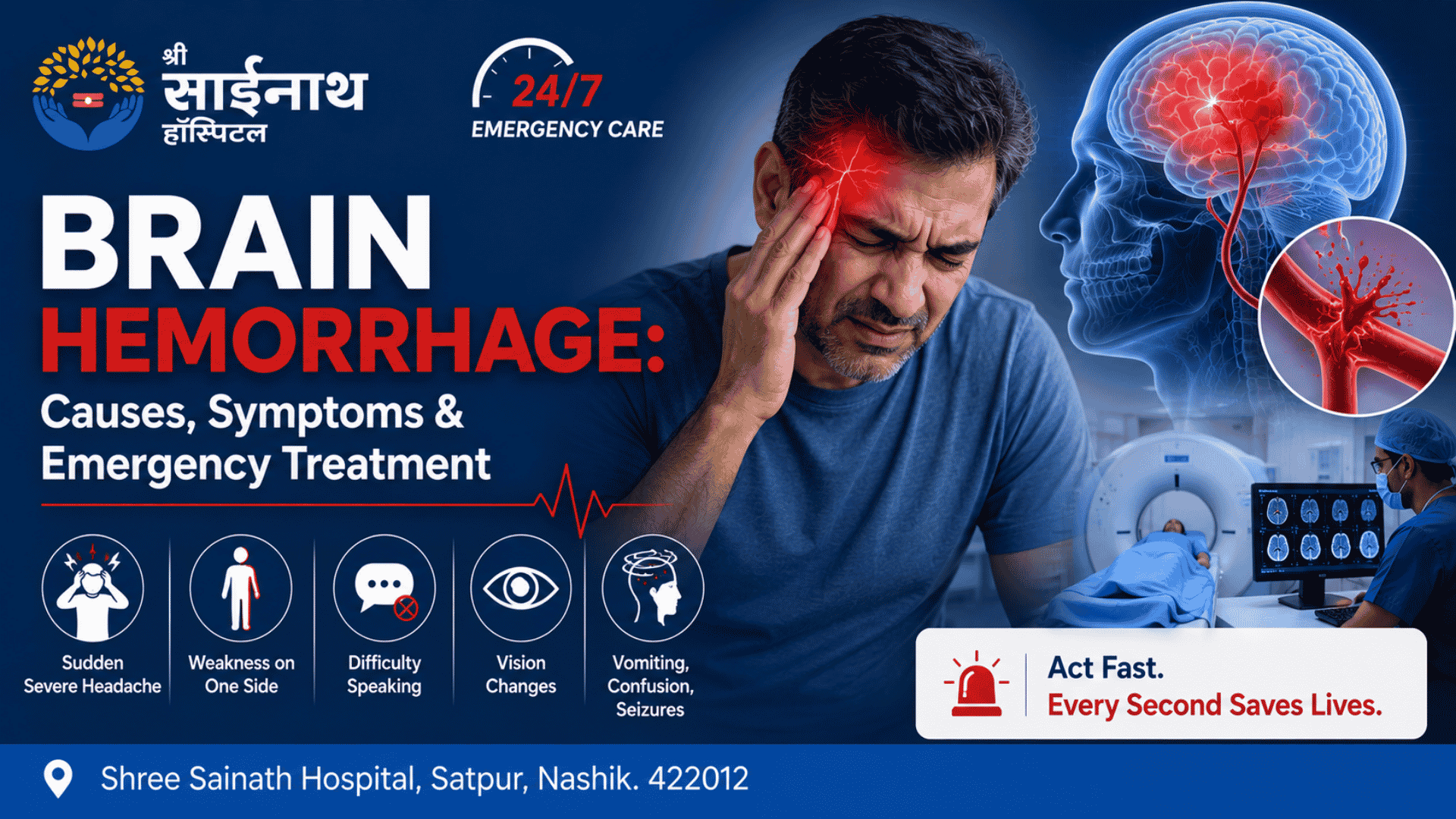
Brain Hemorrhage Treatment in Nashik | Symptoms & Causes
A brain hemorrhage is a medical emergency that occurs when a blood vessel in or around the brain ruptures and causes bleeding. The bleeding can put pressure on brain tissue, damage brain cells, and cause a rapid change in a person's condition. Immediate medical evaluation is essential because treatment depends on the location and amount of bleeding and how severely the brain is affected.
For families in Nashik, recognizing the warning signs of a brain hemorrhage is important. Sudden severe headache, weakness on one side, difficulty speaking, vomiting, seizures, confusion, or loss of consciousness should never be ignored.
Quick Answer
A brain hemorrhage is bleeding inside the brain or in the surrounding spaces. Common causes include uncontrolled high blood pressure, head injury, ruptured brain aneurysm, blood vessel abnormalities, and certain blood-thinning medicines. Symptoms can appear suddenly and may include severe headache, vomiting, weakness, speech or vision problems, seizures, confusion, or unconsciousness. A suspected brain hemorrhage requires immediate emergency hospital care and brain imaging such as CT or MRI.
What Is a Brain Hemorrhage?
A brain hemorrhage occurs when a blood vessel breaks and blood leaks into the brain tissue or the spaces surrounding the brain.
Unlike an ischemic stroke, which happens because a blood vessel becomes blocked, a hemorrhagic stroke occurs because a blood vessel bleeds.
The accumulating blood can increase pressure inside the skull and interfere with normal brain function. Depending on where the bleeding occurs, a patient may develop problems with movement, speech, vision, consciousness or other neurological functions.
A brain hemorrhage can become life-threatening quickly, which is why emergency assessment is critical.
What Causes a Brain Hemorrhage?
Several conditions can increase the risk of bleeding in or around the brain.
High Blood Pressure
Uncontrolled high blood pressure is one of the important causes of spontaneous brain hemorrhage. Over time, high pressure can weaken small blood vessels in the brain and increase the risk of rupture.
This is one reason regular blood pressure monitoring and appropriate treatment are important for stroke prevention.
Head Injury
A serious fall, road accident or other head injury can cause bleeding inside the skull.
Sometimes a person may initially appear well after an injury but develop symptoms later. New or worsening neurological symptoms after significant head trauma require urgent assessment.
Brain Aneurysm
An aneurysm is a weakened area in a blood vessel that can enlarge and potentially rupture. A ruptured aneurysm can cause bleeding around the brain and requires immediate medical attention.
Abnormal Blood Vessels
Conditions such as arteriovenous malformations (AVMs) can create abnormal connections between blood vessels and may increase the risk of brain bleeding.
Blood-Thinning Medicines
Certain anticoagulant or antiplatelet medicines can increase bleeding risk in some situations. These medicines should never be stopped or changed without medical advice.
What Are the Symptoms of Brain Hemorrhage?
Brain hemorrhage symptoms often develop suddenly.
Possible warning signs include:
Sudden, severe headache
Sudden weakness or numbness, particularly on one side
Difficulty speaking or understanding speech
Sudden vision changes
Loss of balance or coordination
Repeated vomiting
Confusion or unusual drowsiness
Seizures
Loss of consciousness
Difficulty walking or moving normally
A sudden, severe headache accompanied by vomiting, neurological symptoms or altered consciousness requires immediate emergency evaluation.
Can a Brain Hemorrhage Happen Without Warning?
Yes. Some brain hemorrhages occur suddenly without obvious warning symptoms beforehand.
However, certain people have a higher risk because of factors such as uncontrolled hypertension, blood vessel abnormalities, blood-thinning medicines, smoking or previous neurological conditions.
Regular management of conditions such as high blood pressure can help reduce certain preventable risks.
Brain Hemorrhage vs Brain Stroke
The term "stroke" describes a sudden disruption of normal blood flow or bleeding affecting the brain.
There are two major categories:
Ischemic stroke: A blood vessel supplying the brain becomes blocked.
Hemorrhagic stroke: A blood vessel ruptures and causes bleeding.
Both can cause sudden neurological symptoms and require urgent medical evaluation. The treatment is different, so doctors need brain imaging to determine which type has occurred.
What Should You Do If You Suspect a Brain Hemorrhage?
If someone suddenly develops symptoms that could indicate a brain hemorrhage:
Do not wait for the symptoms to improve.
Take the person for emergency medical evaluation immediately.
If possible:
Note the approximate time when symptoms started.
Keep the patient safe and avoid unnecessary movement.
Carry their previous medical reports and medication information.
Tell the medical team about any blood-thinning medicines.
Do not give food, drink or medication unless advised by a medical professional.
Do not attempt home remedies or wait for an OPD appointment.
The time when symptoms begin can be particularly important for doctors when deciding on treatment.
How Is a Brain Hemorrhage Diagnosed?
When a patient reaches the hospital, doctors first assess vital signs and neurological function. Brain imaging is then commonly used to identify bleeding.
CT Scan
A CT scan of the brain is often an important initial investigation because it can quickly identify acute bleeding.
MRI
An MRI may be recommended in selected situations to provide more detailed information about the brain and blood vessels.
Additional Tests
Depending on the suspected cause, doctors may recommend blood tests, CT angiography, MR angiography or other vascular investigations.
The choice of investigation depends on the patient's symptoms and clinical condition.
Brain Hemorrhage Emergency Treatment
Treatment depends on the location and size of the hemorrhage, the cause of bleeding, pressure inside the skull, neurological condition and other medical factors.
Initial treatment may focus on:
Stabilizing breathing and circulation
Managing blood pressure appropriately
Monitoring neurological status
Managing raised pressure inside the skull when necessary
Correcting blood-clotting problems when appropriate
Treating seizures if they occur
Preventing complications
Some patients may require neurosurgical intervention, while others may be managed with close neurological and critical care monitoring.
The treatment plan is individualized according to the patient's condition.
Why ICU Care May Be Needed
A patient with a significant brain hemorrhage may require ICU or critical care monitoring because neurological status can change quickly.
In critical care, the medical team can closely monitor:
Consciousness level
Blood pressure
Oxygen levels
Heart rate
Neurological changes
Breathing
Signs of increased pressure inside the skull
Patients with severe brain injury may also require airway management or ventilator support.
This is why access to emergency care, neurological evaluation and critical care support can be important when a brain hemorrhage is suspected.
Does Every Brain Hemorrhage Require Surgery?
No.
Not every brain hemorrhage requires an operation.
Some patients can be managed with close monitoring, medication and treatment of the underlying cause. Others may require surgery or another procedure to remove blood, relieve pressure or address the source of bleeding.
The decision depends on factors such as the location and size of the hemorrhage, neurological condition, underlying cause and overall health of the patient.
Brain Hemorrhage Recovery
Recovery varies significantly between patients.
Some people may recover with relatively limited long-term effects, while others may experience problems with movement, speech, memory, swallowing or daily activities.
Recovery may involve a multidisciplinary rehabilitation program that can include:
Physiotherapy
Occupational therapy
Speech and language therapy
Swallowing rehabilitation
Neurological follow-up
Support for daily activities
The recovery timeline depends on the severity and location of the hemorrhage and the patient's response to treatment.
Can High Blood Pressure Cause Brain Hemorrhage?
Yes. Uncontrolled high blood pressure is an important risk factor for intracerebral hemorrhage.
Long-term high blood pressure can damage and weaken blood vessels in the brain. Managing blood pressure through regular monitoring, prescribed treatment and appropriate lifestyle measures can reduce the risk of complications.
This also creates an important connection between BP management, stroke prevention and brain health.
When Should You Go to the Emergency Department?
Do not wait for an OPD appointment if someone suddenly develops:
Severe headache + vomiting
Weakness or numbness on one side
Speech difficulty
Loss of consciousness
Seizure
Sudden confusion
Sudden vision or balance problems
These symptoms can occur in brain hemorrhage and other serious neurological emergencies.
Immediate emergency evaluation is the safest approach.
Brain Hemorrhage Treatment in Nashik
When a suspected brain hemorrhage occurs, the priority is rapid assessment, brain imaging, stabilization and appropriate specialist management.
Shree Sainath Hospital, Nashik is an advanced life-saving and critical care hospital providing emergency and critical care support for serious medical conditions.
Patients requiring urgent neurological assessment may need emergency evaluation, diagnostic imaging, monitoring and ICU support depending on their condition.
If you suspect a brain hemorrhage, do not delay emergency medical care.
Frequently Asked Questions
What is a brain hemorrhage?
A brain hemorrhage is bleeding inside the brain or in the spaces surrounding it, usually caused by a ruptured blood vessel. It can damage brain tissue and requires urgent medical evaluation.
What is the most common cause of brain hemorrhage?
Uncontrolled high blood pressure is an important cause of spontaneous brain hemorrhage. Other causes include head injury, ruptured aneurysm, abnormal blood vessels and certain medicines that affect blood clotting.
What are the first symptoms of a brain hemorrhage?
Symptoms may include sudden severe headache, weakness or numbness on one side, difficulty speaking, vomiting, seizures, confusion, vision problems or loss of consciousness.
Is brain hemorrhage a stroke?
A brain hemorrhage can be a type of hemorrhagic stroke. Unlike an ischemic stroke, which is caused by a blocked blood vessel, hemorrhagic stroke occurs because a blood vessel ruptures and bleeds.
Can a brain hemorrhage be cured?
Treatment and recovery depend on the cause, location and severity of the bleeding. Some patients recover significantly with medical or surgical treatment followed by rehabilitation, while severe hemorrhages may cause lasting disability.
Does brain hemorrhage always require surgery?
No. Some patients can be treated with intensive monitoring and medical management, while others require surgery or another procedure. The decision is made based on the patient's clinical and imaging findings.
Can high BP cause brain hemorrhage?
Yes. Long-term uncontrolled high blood pressure can weaken brain blood vessels and increase the risk of intracerebral hemorrhage.
How is a brain hemorrhage diagnosed?
Doctors commonly use brain imaging such as a CT scan to identify acute bleeding. MRI and vascular imaging may be used when additional information is needed.
How long does recovery from brain hemorrhage take?
Recovery varies widely. It can take weeks, months or longer depending on the severity and location of the hemorrhage, neurological damage and response to treatment.
Answer Summary
A brain hemorrhage is bleeding inside or around the brain caused by a ruptured blood vessel. High blood pressure, head injury, aneurysms and abnormal blood vessels are among the possible causes. Sudden severe headache, weakness, speech difficulty, vomiting, seizures or loss of consciousness are important warning signs. Brain hemorrhage is a medical emergency requiring immediate hospital evaluation, brain imaging and appropriate medical, critical care or surgical treatment.
Medical Disclaimer
This content is for informational purposes only and does not replace professional medical advice. Consult a qualified doctor for diagnosis and treatment.
Written by: Expert Doctors Team
Location: Satpur, Nashik, Maharashtra