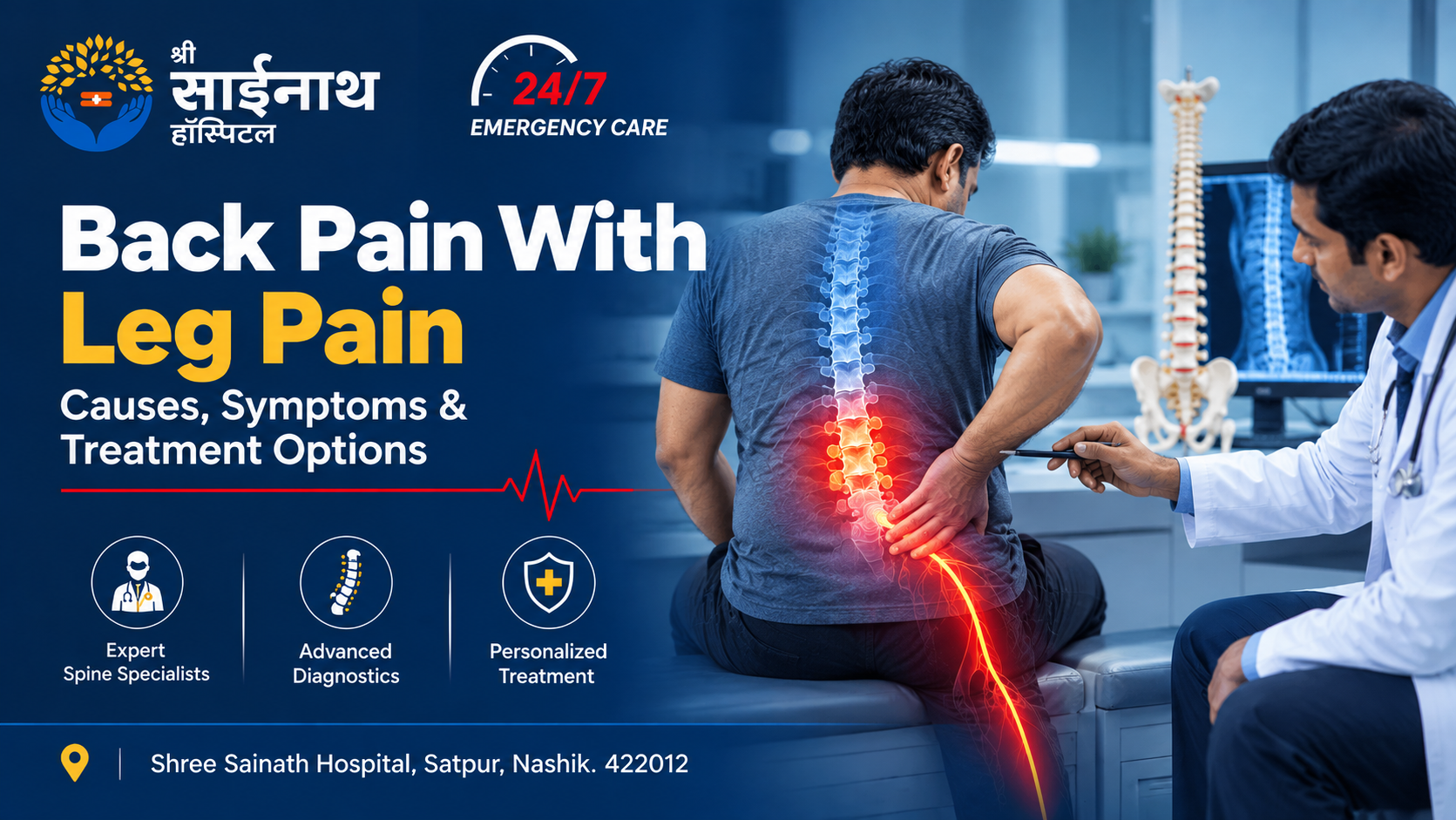
Back Pain With Leg Pain: Causes, Symptoms & Treatment Options
Back pain is common, but when back pain occurs together with leg pain, the symptoms may sometimes involve more than the muscles or joints of the lower back. Pain that travels from the lower back into the buttock, thigh or leg can occur when nerves or structures around the spine become irritated or compressed.
The exact cause can vary from person to person. Some cases improve with non-surgical treatment, while others may require further investigation and specialist care.
Understanding the pattern of pain, accompanying symptoms and possible causes can help you know when professional evaluation may be appropriate.
Quick Answer: What Causes Back Pain With Leg Pain?
Back pain with leg pain can occur due to conditions affecting the muscles, joints, discs or nerves of the lower back. Common causes include muscle strain, disc-related problems, nerve irritation or compression, and conditions such as sciatica.
When a nerve in the lower back is irritated or compressed, pain may travel from the back or buttock into the leg. Some people may also experience tingling, numbness or weakness.
However, back pain with leg pain does not automatically mean that you have a serious spine condition or need surgery. The appropriate treatment depends on the cause, severity of symptoms, medical history and clinical findings.
What Is Back Pain With Leg Pain?
Back pain with leg pain refers to pain occurring in the lower back along with discomfort that may extend into one or both legs.
The leg pain may feel different from ordinary muscle soreness. Depending on the underlying cause, it may be described as:
Sharp or shooting pain
Burning pain
Electric or tingling sensations
Aching or throbbing
Pain travelling from the lower back into the buttock or leg
Numbness
A feeling of weakness in the leg
The location and pattern of symptoms can provide useful information to a doctor, but symptoms alone cannot establish a diagnosis.
Why Does Back Pain Travel Down the Leg?
Pain that travels down the leg can sometimes occur when a nerve originating in the lower spine becomes irritated or compressed.
The lower spine contains nerve roots that contribute to sensation and movement in the legs. Problems involving the spinal discs or surrounding structures may affect these nerves.
This can produce a pattern of pain that starts around the lower back or buttock and extends into the thigh, calf or foot.
One commonly discussed example is sciatica, which describes symptoms associated with irritation or compression of the sciatic nerve or its contributing nerve roots.
Not every case of pain travelling into the leg is sciatica, however. A clinical evaluation is needed to determine the underlying cause.
Common Causes of Back Pain With Leg Pain
Several conditions can contribute to back pain and leg pain.
1. Muscle or Ligament Strain
Overuse, sudden movements, lifting, poor posture or physical activity can strain muscles and supporting tissues around the lower back.
This type of pain may remain primarily around the back, although discomfort can sometimes extend into the buttocks or nearby areas.
2. Herniated or Bulging Disc
The discs between the vertebrae act as cushions for the spine. When a disc bulges or herniates, it may irritate a nearby nerve.
If a nerve is affected, symptoms can include:
Lower back pain
Leg pain
Tingling
Numbness
Weakness
The severity of symptoms can vary considerably.
3. Sciatica
Sciatica commonly refers to pain following the pathway of the sciatic nerve. It may involve the lower back, buttock and one leg.
Symptoms may include:
Shooting pain
Burning or electric-like pain
Tingling
Numbness
Weakness
Sciatica is a description of a symptom pattern rather than a single disease. Its underlying cause needs to be evaluated.
4. Spinal Stenosis
Spinal stenosis occurs when there is narrowing around the spaces through which the spinal nerves travel.
In some people, this can contribute to back pain, leg pain, numbness or weakness. Symptoms may become more noticeable while standing or walking and may improve with sitting or changing position.
5. Age-Related Changes in the Spine
As people age, normal degenerative changes can occur in the discs and joints of the spine.
These changes are common and do not always cause symptoms. When they contribute to nerve irritation, however, a person may develop back pain along with symptoms in the leg.
6. Other Causes
Back and leg pain can have other causes as well. The appropriate evaluation depends on factors such as:
Age
Medical history
Recent injury
Duration of symptoms
Pain location
Numbness or weakness
Physical examination findings
This is why persistent or significant symptoms should not be self-diagnosed solely from an online article.
Symptoms That May Occur With Back Pain and Leg Pain
The symptoms accompanying back pain can vary depending on the underlying cause.
You may experience:
Lower back pain
Pain extending into the buttock
Pain travelling down the thigh or leg
Tingling or pins-and-needles sensations
Numbness
Muscle weakness
Difficulty walking comfortably
Symptoms that become worse with certain movements or positions
Pay attention to how your symptoms behave.
For example, note whether the pain:
Started suddenly or gradually
Began after lifting or an injury
Travels below the knee
Occurs in one leg or both
Gets worse with sitting, standing, walking or bending
Is associated with numbness or weakness
These details can help your doctor during the clinical assessment.
When Is Back Pain With Leg Pain a Concern?
Many causes of back pain can be managed without surgery. However, certain symptoms require prompt medical assessment.
Seek urgent medical attention if back pain with leg symptoms is accompanied by symptoms such as:
New or worsening significant weakness in the leg
Loss of bladder or bowel control
Numbness around the inner thighs, buttocks or genital region
Severe symptoms following significant trauma
Severe or rapidly worsening neurological symptoms
These symptoms may indicate a potentially serious problem requiring urgent evaluation.
Do not wait for an online consultation or routine appointment when severe or rapidly developing warning symptoms are present.
How Is Back Pain With Leg Pain Diagnosed?
Diagnosis begins with a medical history and physical examination.
A doctor may ask about:
When the pain started
Where the pain is located
Whether it travels into the leg
Previous injuries
Activities that make the pain better or worse
Numbness or tingling
Weakness
Previous treatments
Other medical conditions
During the examination, the doctor may assess movement, sensation, muscle strength and reflexes.
Are Imaging Tests Always Needed?
Not necessarily.
Depending on the symptoms and examination, a doctor may determine whether imaging or other investigations are appropriate.
Possible investigations may include:
X-ray
MRI
Other tests when clinically indicated
An MRI, for example, can provide detailed information about discs, nerves and other soft tissues of the spine.
The choice of investigation should be based on the individual patient's symptoms and clinical assessment.
Treatment Options for Back Pain With Leg Pain
Treatment for back pain with leg pain depends on the underlying cause.
There is no single treatment that is appropriate for everyone.
1. Activity Modification
Depending on the condition, temporarily modifying activities that aggravate the pain may help.
However, prolonged bed rest is not generally appropriate for every person with back pain. Your doctor can guide you regarding safe levels of activity.
2. Medicines
A doctor may recommend medicines to help manage pain or inflammation when appropriate.
Medication selection depends on factors such as:
Your age
Existing medical conditions
Other medicines you take
The suspected cause of pain
Potential side effects
Do not start or continue prescription medicines without appropriate medical guidance.
3. Physiotherapy
Physiotherapy may be recommended for certain causes of back and leg pain.
Depending on the individual's condition, a physiotherapist may work on:
Movement and flexibility
Strength
Posture
Core conditioning
Functional movement
Gradual return to activity
Exercises should be appropriate for the underlying condition rather than copied from a generic online routine.
4. Non-Surgical Spine Treatment
Some patients may improve with a combination of conservative treatments and monitoring.
Depending on the diagnosis, treatment may involve medication, physiotherapy, activity modification and other non-surgical approaches.
The goal is to address the cause and manage symptoms while helping the patient return to appropriate daily activities.
5. Interventional Treatments
In selected cases, a specialist may consider an injection or another minimally invasive intervention.
Whether such treatment is appropriate depends on the diagnosis, symptoms, examination and imaging findings.
6. Spine Surgery
Back pain with leg pain does not automatically mean spine surgery is necessary.
Surgery may be considered in selected situations, particularly when there is a structural problem causing significant nerve compression, persistent symptoms despite appropriate non-surgical treatment, or certain neurological findings.
The decision should be made after evaluating:
The underlying diagnosis
Severity and duration of symptoms
Neurological findings
Imaging results
Response to non-surgical treatment
Overall health
A spine specialist can explain whether surgery is appropriate and discuss the available options.
Is Surgery Always Necessary for Back Pain With Leg Pain?
No. Many people with back and leg pain can be managed without surgery.
Treatment depends on the underlying cause and the individual's symptoms.
For some patients, symptoms may improve with conservative treatment. For others, particularly when significant nerve compression or neurological problems are present, surgery may become an appropriate consideration.
Therefore:
Back pain ≠ automatic spine surgery.
A specialist evaluation can help determine which treatment pathway is appropriate for your condition.
When Should You See a Spine Specialist?
Consider consulting a doctor or spine specialist when:
Back pain continues or keeps returning
Pain regularly travels down the leg
You experience persistent numbness or tingling
You notice weakness in a leg
Pain interferes with walking or daily activities
Symptoms are not improving with initial treatment
You have been advised to undergo spine surgery and want another medical opinion
A specialist can evaluate the symptoms, review relevant reports and determine whether further investigation or treatment is needed.
What Should You Ask Your Doctor?
If you are experiencing back pain with leg pain, consider asking:
What could be causing my symptoms?
Does the pattern of my pain suggest nerve involvement?
Do I need any imaging or other tests?
Can my condition be treated without surgery?
Would physiotherapy be appropriate for me?
What symptoms should prompt urgent medical attention?
If surgery has been suggested, why is it being considered?
Would a second opinion be useful in my situation?
Writing down your symptoms and bringing previous medical reports can make the consultation more productive.
Should You Get a Second Opinion for Spine Treatment?
A second opinion may be useful when you have been advised to undergo spine surgery or when you are uncertain about your diagnosis or treatment options.
A second opinion can help you understand:
The diagnosis
Why a particular treatment has been recommended
Available non-surgical options
Whether surgery is being considered and why
What questions you should discuss before making a treatment decision
A second opinion should complement, not delay, urgent medical attention when serious warning symptoms are present.
Back Pain With Leg Pain: Key Takeaways
Back pain with leg pain can have several causes.
Nerve irritation or compression can cause pain to travel from the lower back into the leg.
Sciatica is one possible explanation for radiating leg pain, but not every case is sciatica.
Symptoms such as numbness, tingling and weakness may indicate nerve involvement.
Diagnosis depends on clinical evaluation and, when appropriate, investigations such as imaging.
Many patients can be treated without surgery.
Spine surgery is considered only when clinically appropriate.
Severe weakness, bladder or bowel changes, saddle-area numbness or serious trauma require urgent medical attention.
Persistent or worsening symptoms should be evaluated by an appropriate healthcare professional.
Shree Sainath Hospital, Satpur, Nashik
Shree Sainath Hospital, Satpur, Nashik, follows the broader positioning of Advanced & Life-Saving Care, with specialist evaluation and treatment across relevant areas of healthcare. For patients experiencing persistent back pain, radiating leg pain or other symptoms that may require spine evaluation, consultation with an appropriate specialist can help identify the cause and discuss suitable treatment options.
Patients should bring previous medical reports, imaging studies and a list of current medicines when available.
The appropriate treatment depends on individual clinical assessment rather than symptoms alone.
FAQ SECTION
1. What causes back pain with leg pain?
Back pain with leg pain can result from muscle or ligament problems, disc-related conditions, nerve irritation or compression, spinal stenosis and other spine-related conditions. The exact cause requires individual evaluation.
2. Why does my lower back pain radiate to my leg?
Pain may radiate from the lower back into the leg when a nerve or nerve root is irritated or compressed. Conditions such as certain disc problems can cause this pattern of symptoms.
3. Is back pain that travels down the leg always sciatica?
No. Sciatica is one possible cause of pain travelling from the lower back or buttock into the leg. Other conditions can produce similar symptoms, so an appropriate clinical evaluation is needed.
4. Can back pain with leg pain be treated without surgery?
Yes. Depending on the underlying cause, many patients may be managed with non-surgical treatments such as activity modification, medication, physiotherapy and other appropriate interventions.
5. When should I see a doctor for back pain and leg pain?
Consider medical evaluation when symptoms persist, worsen, interfere with daily activities, repeatedly travel into the leg, or are accompanied by numbness or weakness.
6. What tests may be needed for back pain with leg pain?
A doctor may begin with a medical history and physical examination. Depending on the findings, imaging such as an X-ray or MRI may be recommended. Not everyone with back pain requires imaging.
7. Does back pain with leg pain mean I need spine surgery?
No. Back pain with leg pain does not automatically mean surgery is required. Surgery is considered only in selected clinical situations based on the diagnosis, symptoms, neurological findings, imaging and response to other treatments.
8. Should I get a second opinion before spine surgery?
A second opinion may help you better understand the diagnosis, reason for the recommended procedure and available treatment options. However, urgent symptoms should receive prompt medical attention rather than being delayed for a routine second opinion.
Conclusion
Persistent back pain or pain travelling into the leg? Consider consulting an appropriate spine specialist to understand the possible cause and discuss suitable treatment options. If you have previous reports or imaging, bring them for your consultation at Shree Sainath Hospital, Satpur, Nashik.