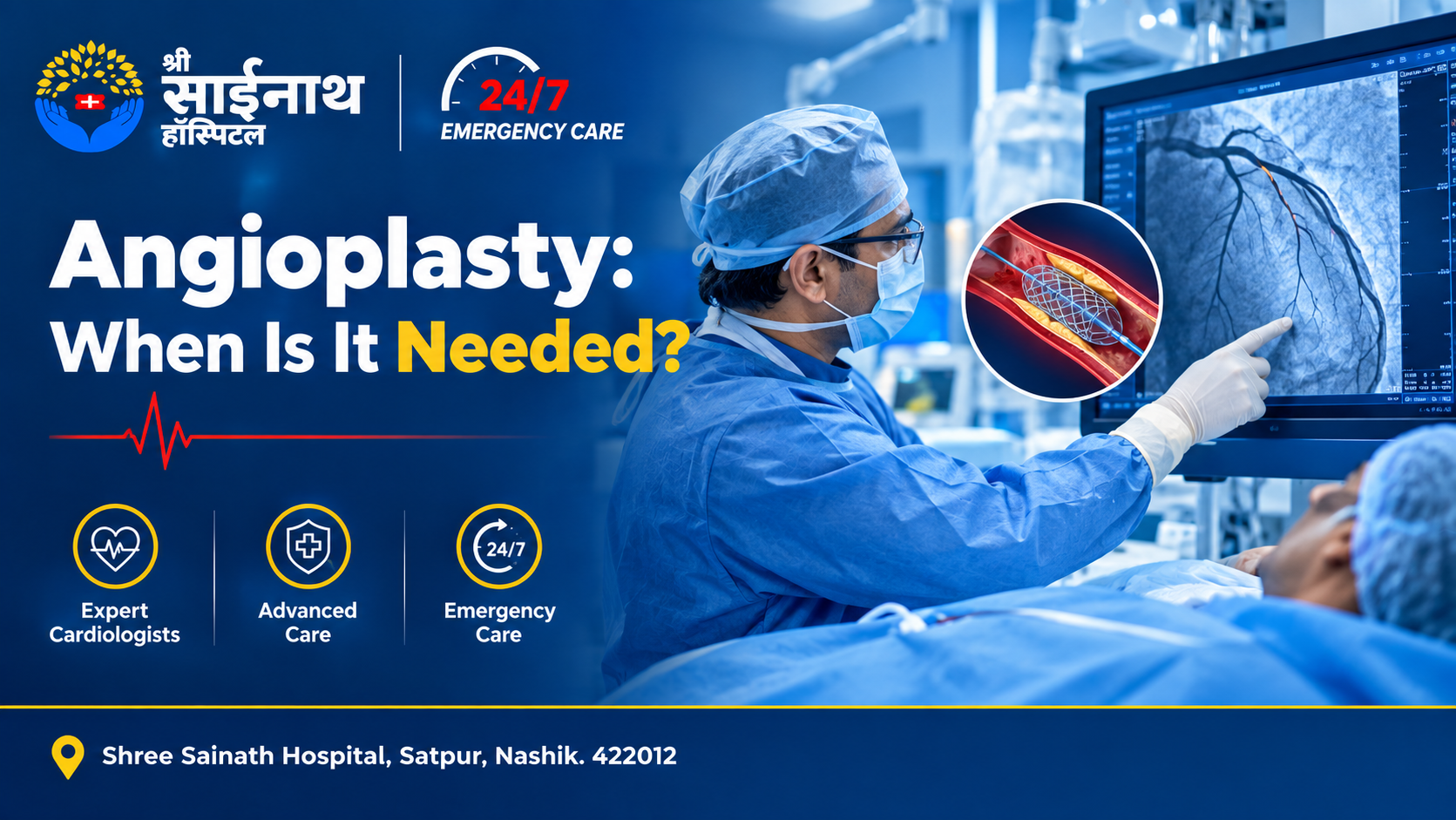
Angioplasty: When Is It Needed and What Should Patients Know?
When a person is diagnosed with a blocked or narrowed coronary artery, one of the treatments that may be discussed is angioplasty. But a diagnosis of coronary artery blockage does not automatically mean that angioplasty is necessary.
Doctors consider several factors, including the location and severity of the blockage, symptoms, test results, overall heart health, medical history and whether the situation is urgent.
Understanding when angioplasty is needed, how the procedure works, when a stent may be placed and what recovery involves can help patients and their families have a more informed discussion with their doctor.
Quick Answer: When Is Angioplasty Needed?
Angioplasty may be considered when a coronary artery is significantly narrowed or blocked and restoring blood flow is clinically appropriate.
It may be used in some patients with significant coronary artery disease, particularly when symptoms cannot be adequately controlled with medication or when there is an urgent need to restore blood flow, such as in certain heart attacks.
However, angioplasty is not automatically required for every coronary artery blockage. Treatment decisions depend on the individual patient's symptoms, investigations, coronary anatomy, overall health and clinical situation.
What Is Angioplasty?
Angioplasty, also called percutaneous coronary intervention (PCI), is a minimally invasive procedure used to improve blood flow through a narrowed or blocked coronary artery.
During the procedure, a doctor guides a thin catheter through a blood vessel to the affected coronary artery. A small balloon may then be inflated at the narrowed area to help widen the artery.
In many cases, a stent is placed to help keep the artery open.
The procedure is different from open-heart bypass surgery because angioplasty does not require opening the chest to create a bypass around the blocked artery.
Why Do Coronary Arteries Become Blocked?
The coronary arteries supply blood and oxygen to the heart muscle.
Over time, fatty deposits and other substances can build up inside artery walls. This process, known as atherosclerosis, can cause the artery to become narrowed.
Coronary artery disease may be associated with factors such as:
High blood pressure
High cholesterol
Diabetes
Smoking or tobacco use
Obesity
Physical inactivity
Increasing age
Family history of heart disease
The presence of risk factors does not by itself determine whether an individual needs angioplasty. A doctor needs to evaluate the person's overall cardiovascular health.
What Symptoms May Lead to an Angioplasty Evaluation?
Coronary artery disease can cause symptoms when the heart muscle does not receive enough oxygen-rich blood.
Possible symptoms include:
Chest pressure, tightness or discomfort
Shortness of breath
Discomfort that may spread to the arm, shoulder, back, neck or jaw
Unusual tiredness
Sweating
Nausea or dizziness
Symptoms can vary between individuals, and some people may have little or no warning before a serious cardiac event.
Chest discomfort or other symptoms that could indicate a heart attack require urgent medical evaluation rather than waiting for an online consultation.
How Do Doctors Decide Whether Angioplasty Is Needed?
A doctor does not decide on angioplasty based on symptoms alone.
The evaluation may include:
Medical history and physical examination
Electrocardiogram (ECG)
Blood tests, including tests used when a heart attack is suspected
Echocardiography or other cardiac imaging, when appropriate
Stress testing, when clinically indicated
Coronary imaging or angiography to assess the coronary arteries
The results help the cardiac team understand the location and extent of coronary artery disease and determine which treatment approach is appropriate.
Is Angioplasty Always Needed for a Blocked Artery?
No. A blocked or narrowed artery does not automatically mean that angioplasty is required.
Depending on the patient's condition, treatment may include:
Lifestyle changes
Medicines
Management of blood pressure, cholesterol or diabetes
Monitoring and follow-up
Angioplasty with or without stent placement
Coronary artery bypass surgery
The appropriate treatment depends on factors such as the severity and location of the disease, symptoms, test findings, other medical conditions and the overall clinical picture.
This is why patients should not assume that a particular treatment is necessary solely because a scan or test has shown an artery blockage.
What Happens During an Angioplasty Procedure?
A typical angioplasty procedure involves several steps.
1. Preparing the patient
The medical team reviews the patient's medical history, medications, allergies and relevant test results before the procedure.
2. Inserting the catheter
A thin catheter is introduced through a blood vessel, commonly through the wrist or groin, and guided toward the coronary arteries.
3. Identifying the blockage
Contrast dye and X-ray imaging are used to visualize the coronary arteries and identify areas of narrowing or blockage.
4. Opening the narrowed artery
A small balloon may be inflated at the narrowed section to improve the opening of the artery.
5. Stent placement
When appropriate, a small mesh tube called a coronary stent may be placed inside the artery.
The stent helps support the artery and maintain blood flow.
6. Completing the procedure
The catheter is removed and the patient is monitored by the medical team.
The exact approach varies according to the patient's condition and the coronary anatomy.
What Is an Angioplasty Stent?
A coronary stent is a small mesh tube placed inside a coronary artery to help keep it open after the artery has been treated.
Many modern coronary stents are drug-eluting stents, which release medication intended to reduce the chance of the artery becoming narrowed again.
If a stent is placed, taking prescribed medicines exactly as directed is important. Patients should not stop antiplatelet or other prescribed cardiac medicines without discussing it with their doctor.
What Are the Benefits of Angioplasty?
For appropriately selected patients, angioplasty can:
Improve blood flow through a treated coronary artery
Relieve symptoms caused by reduced blood flow in appropriate situations
Restore blood flow urgently in certain heart attacks
Avoid the need for open-heart bypass surgery in some patients
Provide a minimally invasive method of treating certain coronary blockages
The expected benefit depends on the patient's individual condition and the reason angioplasty is being performed.
What Are the Risks of Angioplasty?
Although angioplasty is commonly performed, it is still a medical procedure and carries potential risks.
Possible complications can include:
Bleeding or bruising at the catheter insertion site
Damage to the blood vessel
Reaction to contrast dye
Irregular heart rhythm
Blood clot formation
Re-narrowing of the treated artery
Heart attack
Stroke
Kidney-related complications in susceptible patients
Rarely, serious or life-threatening complications
The individual risk depends on factors such as age, general health, kidney function, the complexity of the coronary disease and whether the procedure is being performed urgently.
Your treating doctor can explain the potential benefits and risks in the context of your specific condition.
What Is Angioplasty Recovery Like?
Recovery after angioplasty varies from patient to patient.
Some people may return to normal activities relatively quickly after an uncomplicated procedure, while others may need more time, particularly if angioplasty was performed during or after a heart attack or if there are other health concerns.
During recovery, patients may be advised to:
Take prescribed medicines regularly
Follow instructions regarding the catheter insertion site
Attend follow-up appointments
Follow recommended dietary and lifestyle changes
Avoid smoking and tobacco
Gradually return to physical activity according to medical advice
Participate in cardiac rehabilitation when recommended
Do not use a general recovery timeline as a substitute for your treating doctor's instructions.
Angioplasty After a Heart Attack
Angioplasty can play an important role in treating certain types of heart attacks.
When a coronary artery is suddenly blocked, restoring blood flow quickly may help limit damage to the heart muscle.
In an emergency situation, patients should seek immediate medical attention.
Do not wait for an appointment, online consultation or blog information if you or someone around you has symptoms that could indicate a heart attack.
Angioplasty vs Bypass Surgery
Angioplasty and coronary artery bypass surgery are different approaches to treating coronary artery disease.
Neither treatment is automatically appropriate for every patient.
The choice between angioplasty, bypass surgery, medication or another treatment depends on the patient's coronary anatomy, symptoms, medical history, overall health and clinical evaluation.
When Should You Discuss Angioplasty With a Doctor?
You should discuss your treatment options with a qualified cardiac specialist if you have been diagnosed with coronary artery disease or have been advised to undergo angioplasty.
A specialist consultation can help you understand:
Where the blockage is located
How severe the blockage is
Whether symptoms are related to the blockage
Whether angioplasty is appropriate
Whether a stent may be required
What alternative treatment options exist
What medicines and lifestyle measures are recommended
Whether a second opinion would be useful
Questions to Ask Your Doctor Before Angioplasty
If angioplasty has been recommended, consider asking:
Where exactly is the blockage?
How severe is the narrowing?
Why is angioplasty being recommended in my case?
Will a stent be required?
What are the expected benefits?
What are the potential risks?
Are medicines or other treatment options appropriate?
Would bypass surgery be considered in my situation?
What should I expect during recovery?
Which medicines will I need after the procedure?
Taking your investigation reports and current medication list to the consultation can help the doctor assess your situation more effectively.
Should You Get a Second Opinion?
A second opinion may be useful when a patient has questions about a recommended procedure, particularly when treatment options are complex or when the patient wants to better understand alternatives.
A second opinion should complement—not delay—urgent treatment when a person is experiencing a medical emergency.
Shree Sainath Hospital, Satpur, Nashik
Shree Sainath Hospital follows the broader positioning of Advanced & Life-Saving Care, with patient care focused on appropriate medical evaluation, specialist involvement and treatment based on individual clinical needs.
For patients researching angioplasty or coronary artery blockage, understanding the diagnosis and available treatment options is an important part of making an informed healthcare decision.
Patients can discuss their symptoms, investigation reports and treatment recommendations with the appropriate medical team to understand whether angioplasty, medication, bypass surgery or another approach may be suitable for their individual condition.
Key Takeaways
Angioplasty is a procedure used to improve blood flow through a narrowed or blocked coronary artery.
A coronary artery blockage does not automatically mean angioplasty is required.
Doctors consider symptoms, investigations, coronary anatomy and overall health before recommending treatment.
A stent may be placed during angioplasty to help keep the treated artery open.
Angioplasty can be used urgently in certain heart attacks.
Medication, lifestyle changes, angioplasty and bypass surgery may all have a role depending on the patient's condition.
Patients should follow their doctor's medication and recovery instructions after the procedure.
Sudden chest discomfort or symptoms suggestive of a heart attack require immediate medical attention.
FAQ SECTION
1. What is angioplasty?
Angioplasty is a minimally invasive procedure used to improve blood flow through a narrowed or blocked coronary artery. A balloon may be used to widen the narrowed area, and a stent may be placed when appropriate.
2. When is angioplasty needed?
Angioplasty may be recommended when a coronary artery is significantly narrowed or blocked and restoring blood flow is clinically appropriate. The decision depends on symptoms, test results, coronary anatomy and the patient's overall health.
3. Does every heart blockage require angioplasty?
No. Some coronary artery blockages can be managed with medicines and lifestyle changes, while others may require angioplasty or bypass surgery. Treatment should be individualized after medical evaluation.
4. Is a stent always placed during angioplasty?
Not necessarily. Whether a stent is needed depends on the specific coronary artery problem and the treatment approach chosen by the medical team.
5. How long does angioplasty recovery take?
Recovery varies depending on the patient's overall health, the complexity of the procedure and whether angioplasty was performed during an emergency such as a heart attack. Your doctor will provide individualized recovery instructions.
6. What are the risks of angioplasty?
Potential risks include bleeding, blood vessel injury, contrast-related reactions, abnormal heart rhythms, re-narrowing of the artery, heart attack, stroke and other complications. Individual risk varies between patients.
7. Is angioplasty better than bypass surgery?
Angioplasty and bypass surgery are different treatments. The appropriate option depends on the location and extent of coronary artery disease, symptoms, overall health and other clinical factors. A cardiac specialist can explain which options apply to an individual patient.
8. Can I get a second opinion before angioplasty?
Yes. A second opinion can help patients understand the reason for the recommended procedure and discuss alternative treatment options when appropriate. However, suspected heart attacks and other emergencies require immediate medical care and should not be delayed for a second opinion.
Conclusion
Have you been advised to undergo angioplasty or have questions about a coronary artery blockage? Discuss your symptoms, investigation reports and treatment options with an appropriate cardiac specialist at Shree Sainath Hospital, Satpur, Nashik.
For sudden or severe chest pain, breathlessness, fainting or other symptoms that may indicate a heart attack, seek emergency medical attention immediately.