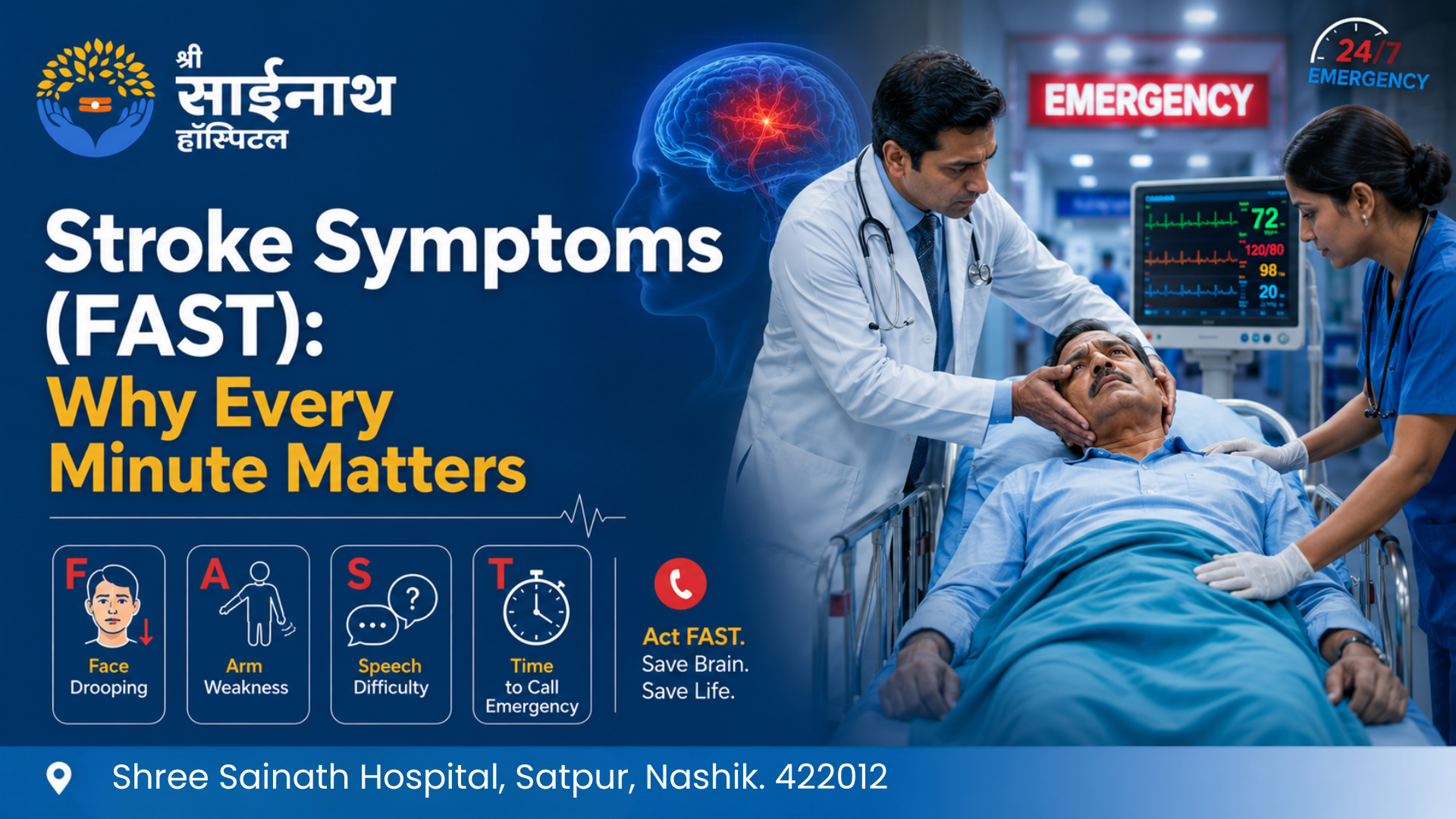
Stroke Symptoms (FAST): Why Every Minute Matters
Stroke is a medical emergency that can happen suddenly and change a person’s speech, movement, balance, or consciousness within minutes.
Many families in Nashik initially mistake stroke symptoms for weakness, fatigue, low BP, or temporary dizziness and delay hospital evaluation.
The biggest problem with stroke is that time matters. The earlier a patient receives emergency evaluation and monitoring, the better the chances of reducing complications and improving recovery outcomes.
This article explains stroke symptoms using the FAST method in simple language so families can recognize warning signs early and seek medical help without delay.
Quick Answer
A stroke is a medical emergency.
Use FAST to remember the most common warning signs:
F - Face drooping
A - Arm weakness
S - Speech difficulty
T - Time to act fast
Other symptoms like sudden confusion, balance problems, severe headache, vision changes, vomiting, or unconsciousness also need urgent medical evaluation.
What Is a Stroke? (Simple Explanation)
A stroke happens when the brain suddenly does not receive proper blood flow or when bleeding occurs inside the brain.
Because brain cells depend on continuous oxygen supply, even a short interruption can affect important functions like:
speech,
movement,
memory,
balance,
and consciousness.
This is why doctors repeatedly emphasize:
“Every minute matters during stroke.”
Early evaluation helps doctors quickly identify the cause and begin the right monitoring and treatment plan.
FAST: The Simplest Way to Recognize Stroke Symptoms
FAST is a simple method doctors use worldwide to help people identify common stroke warning signs quickly.
F - Face Drooping
Ask the person to smile.
If one side of the face appears uneven or droops suddenly, it may be a warning sign of stroke.
A - Arm Weakness
Ask the person to raise both arms.
One arm may feel weak, numb, or drift downward unexpectedly.
S - Speech Difficulty
Stroke can affect speech very suddenly.
The person may:
speak unclearly,
struggle to form words,
sound confused,
or have difficulty understanding simple sentences.
T - Time to Act Fast
If these symptoms appear suddenly, seek emergency medical evaluation immediately.
Do not wait for symptoms to improve on their own.
Other Stroke Symptoms People Commonly Ignore
Not every stroke looks the same.
Some patients may not have classic FAST symptoms but still experience serious neurological warning signs. Seek urgent evaluation if symptoms appear suddenly, such as:
sudden confusion,
difficulty understanding,
loss of balance,
dizziness,
blurred or double vision,
severe headache,
vomiting with drowsiness,
sudden numbness,
or loss of consciousness.
Even symptoms that improve quickly should never be ignored.
“The Symptoms Improved in 10 Minutes” - Is It Still Serious?
Yes.
Some patients experience temporary stroke-like episodes where symptoms reduce after a few minutes. Families often assume the danger has passed and delay treatment.
However, doctors still consider this serious because the risk of a major stroke may remain.
Even brief neurological symptoms need proper medical evaluation and monitoring.
Why Every Minute Matters During Stroke
When a stroke begins, brain tissue is at risk.
Early diagnosis helps doctors:
identify whether the stroke is caused by blockage or bleeding,
begin monitoring quickly,
reduce complications,
and improve chances of recovery.
Delays can sometimes increase the risk of permanent disability affecting speech, movement, swallowing, memory, or coordination.
This is why stroke symptoms should never be observed casually at home.
What Happens During Stroke Emergency Evaluation?
For many families, stroke situations feel frightening because symptoms appear suddenly and patients may become confused or unable to communicate properly.
Emergency stroke care follows a structured medical approach designed for rapid decision-making.
The initial emergency process usually includes:
Rapid assessment of symptoms and vital signs
Neurological examination
Brain imaging if required
Monitoring and stabilization
Treatment planning and family communication
Doctors evaluate:
speech,
limb strength,
reflexes,
consciousness,
coordination,
and symptom onset timing.
Depending on severity, some patients may require ICU or critical care monitoring for close observation.
Who Is at Higher Risk of Stroke?
Stroke risk increases significantly in people with:
high blood pressure,
diabetes,
smoking habits,
high cholesterol,
obesity,
heart rhythm problems,
sedentary lifestyle,
or previous stroke history.
However, younger adults can also develop stroke, which is why sudden neurological symptoms should never be ignored based on age alone.
How to Reduce Stroke Risk
While not every stroke can be prevented, risk can often be reduced through healthy lifestyle habits and regular medical monitoring.
Doctors generally advise:
regular BP and diabetes checkups,
healthy diet and exercise,
weight management,
avoiding tobacco,
stress management,
and proper treatment of heart or vascular conditions.
Ignoring warning signs or stopping medications without medical advice can increase long-term risk.
Consult Our Experts : Book Appointment
When Should Families Seek Emergency Care Immediately?
Seek emergency medical evaluation immediately if someone suddenly develops:
facial drooping,
arm weakness,
speech difficulty,
confusion,
severe dizziness,
balance problems,
unconsciousness,
or sudden severe headache.
Even if symptoms improve, emergency evaluation is still important.
Early diagnosis and monitoring can make a major difference in stroke recovery and long-term outcomes.
FAQs
What are the first warning signs of stroke? Face drooping, arm weakness, and speech difficulty are the most common early warning signs. Sudden confusion, dizziness, or vision changes may also occur.
Is stroke always painful? No. Many strokes occur without pain, which is why sudden weakness or speech problems should never be ignored.
Can stroke symptoms come and go? Yes. Some symptoms improve temporarily, but urgent evaluation is still necessary because the risk may continue.
Who is at higher risk for stroke? People with high BP, diabetes, smoking habits, obesity, cholesterol problems, heart disease, or previous stroke history have higher risk.
What should I do if I suspect a stroke?
Seek emergency medical care immediately. Do not wait for symptoms to improve on their own.
Medical Disclaimer
This article is for general awareness only and does not replace professional medical consultation. If symptoms are severe, sudden, or worsening, seek emergency medical care immediately.
Written by: Expert Doctors Team
Location: Satpur, Nashik, Maharashtra
Last updated: 14/06/2026